The story of the Jesuits of English-speaking America is largely forgotten. They came to Maryland only shortly after their better-known brothers reached Canada and more than fifty years before Eusebio Kino travelled north to California. But they had no romance. The dreams of a new Christian empire, of a European system translated whole onto the American wilderness, were not theirs, nor did they find the heroic martyrdoms of an Isaac Jogues or a Jean de Brébeuf. In their day they published no annual letters, and no historian since has imparted to their story the epic vigor with which Francis Parkman chronicled the Canadian Jesuits.
Yet this small group of men laid stronger foundations for Catholicism in America than did the Spanish in California or the French in Canada. This exhibit, by recapturing some of that forgotten history, offers a glimpse of the world of those gentlemen of Maryland who, but for a few Franciscans, were the whole of the Catholic Church in British North America. British in culture themselves, they made it possible for the Irish and later Catholic immigrants to adopt the Anglo-American culture without leaving their faith. John Carroll, the first national leader of the Church in America, emerged from this group and helped shape its evolution in the early national period.
Catholicism came to Maryland on March 25, 1634, an auspicious day: the Feast of the Annunciation and the first day of the English new year. A small group, Protestants and Catholics mixed, landed on a small island in the lower Potomac near the Maryland shore, and Father Andrew White celebrated Mass to bless the beginning of their colony. The Calverts came to Maryland as the Puritans had come to Massachusetts, for piety and for profit. Seeking a refuge from the Penal Laws, they hoped also to reap the benefits of a bountiful new land.
The Jesuits came to minister to the Catholic colonists, but also with an eye to the conversion of the native population. "Who then can have a doubt," White wrote before leaving England, "but that by this one work so glorious, many thousand souls may be led to Christ?" White and his companions overcame the hostility of some of the tribes, the prejudice of Proprietor and English settlers, and the great barrier of language to convert several tribal chiefs. At St. Mary's City White made of an Indian hut the colony's first chapel. But these efforts were not encouraged; Proprietor and settlers preferred to disperse the Indians. Determined to bring Christianity to them in their own tongue, White laboriously composed a catechism for the Piscataways. The fragment of prayers surviving at Georgetown was probably a draft prepared for another missioner.
The promising seedtime, however, was not to realize the harvest White had foreseen in England. Yellow fever took the lives of White's first companions, John Altham and Thomas Gervase; Ferdinand Poulton was killed in a shooting accident. In 1645 a Puritan revolt displaced the Calverts, and White and Thomas Copley were bundled off to England in chains. Returning some time later with a restored Lord Baltimore, Copley found that the Indians had been driven off, and thereafter the Jesuits' ministry was limited to the English settlers and their servants, among whom were numbered already African slaves.
From the first the Jesuits shared the culture of the new colony. Maryland was unique; granting unprecedented religious toleration, it supported no established church. The Jesuits had to support themselves. Under the Conditions of Plantation of 1636, Thomas Copley obtained 24,500 acres, including St. Inigoes Manor near St. Mary's City. Later purchases and gifts led to the founding of other manors in southern Maryland and on the Eastern Shore. The plantations of the Jesuit "gentry" were worked at first by indentured servants, but by the end of the century that source of hands had run dry and slaves gradually filled up the vacancy. A French Jesuit visiting Maryland in 1674 found the lifestyle puzzling, remarking on "two of our Fathers and a Brother, . . . the Fathers being dressed like gentlemen, and the Brother like a farmer."
But the substantial manor houses at St. Inigoes, Newtown, and elsewhere were not for all; many Jesuits lived simply on isolated farms. Joseph Mosley, at St. Joseph's on the Eastern Shore, was proud that he could support himself and his missionary work, but deeply regretted his isolation from his fellow priests. From these farms, which served as mission centers, Jesuits went out as circuit riders to minister to Catholics spread throughout southern and eastern Maryland, frequently travelling on horseback 300 miles in a week. "This, you'll say, is hard," Mosley wrote his sister in London, "it's easy . . . to what it was."
The "Glorious Revolution" of 1688-1689 brought violent change. The Calverts were again unhorsed, and Catholics found themselves under the same Penal Laws which had caused them to flee England. Always a minority, the Catholics were now powerless: unable to vote, to worship publicly, to hold public office. They were taxed to support the Anglican clergy, fined for sending their children abroad to be educated in Catholic schools, and forbidden to inherit property unless they swore the oath of allegiance to the King as head of the Church of England. Catholic priests were virtually barred from the colony under the threat of life imprisonment.
The harshest of these laws were not often applied: Jesuit priests, occasionally arrested, were never imprisoned. But Catholics, deprived of many of their rights, were subject to the arbitrary actions of a Protestant majority which used anti-Catholic feeling as a political tool. A crisis came during the French and Indian War, when the loyalty of Catholics was suspect. A series of repressive measures, including a double tax on Catholics' property, prompted Charles Carroll (the father of Charles Carroll of Carrollton) to petition for the restoration of Catholic rights — and to advise his son to seek his happiness elsewhere. Not surprisingly, the Jesuits began to look toward Pennsylvania as a new field of endeavor.
Catholics supported the Revolution in disproportionate numbers; they had long familiarity with "taxation without representation," and Charles Carroll of Carrollton was among the signers of the Declaration of Independence. The war brought great changes for the better for Catholics, but the Declaration compounded a crisis begun in 1773 with Clement XIV's suppression of the Society of Jesus. The twenty-three Jesuits in Maryland and Pennsylvania, no longer subject to Jesuit superiors in England and Rome, were, after the Revolution, cut off from the authority of the Apostolic Vicar of London.
Into this vacuum John Carroll returned from Liege, where he had been teaching at a Jesuit seminary. Carroll, more than anyone else, shaped the foundations of the American Church, leading the organization of the Select Body of the Clergy that wrote a constitution for the American Church and elected him its first bishop in 1789. The suppression brought Carroll to America. The Revolution, which freed Catholics from the Penal Laws, made possible the organization of the clergy and the fulfillment of a hope for a Jesuit college that went back to 1640. Land for Georgetown College was acquired in 1787, and four years later it received its first student. John Carroll was its founder. The need for it, as he said, was great: "On this Academy is built all my hopes of permanency and success of our H. Religion in the United States." The ex-Jesuits still had a living to make, and so, under Carroll, they formed the Corporation of the Roman Catholic Clergy of Maryland to protect the estates, which continued to be the main support of their apostolic work.
This planning and activity was carried on with the hope that the Society of Jesus would be restored, and several times during this period former Jesuits considered attempting a liaison with the Jesuits who survived the suppression in White Russia. Finally, in 1802, a year after Pius VII recognized the Russian Province of the Society, seven ex-Jesuits petitioned Carroll to use his influence so that they might be allowed to affiliate themselves with the Russian Jesuits. Although he himself held back from re-entering the Society on this basis, Carroll agreed to make the request, and permission was granted in 1804. The following year five former Jesuits renewed their vows, and Carroll turned over to them the college at Georgetown. Thus began the second era of the Maryland mission of the Society of Jesus; from Georgetown that mission would grow with the nation until it also spanned the continent.
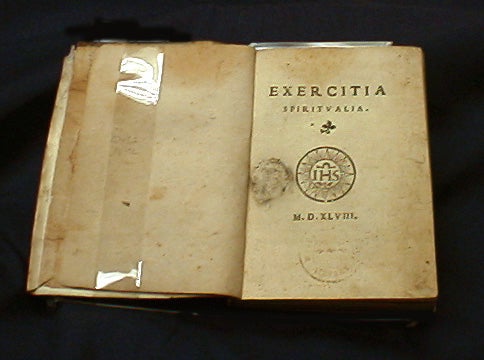
Exercitia spiritualia
Loyola, St. Ignatius
Rome: Blado
M.D.XLVIII
St. Ignatius (Inigo de Oñaz y Loyola), 1491?-1556, was the founder of the Society of Jesus. By turns courtier, soldier, and priest, he directly or indirectly inspired the labors of the Society, shaped its formation, and both codified and exemplified the goals that have been its aim. The first edition of a book which St. Ignatius began writing at Manresa in 1522-1523; extensively revised and translated into Latin for its first publication, the Exercises not only is central to the Jesuit experience, but is also one of the great monuments in the modern history of the Church. (Woodstock)
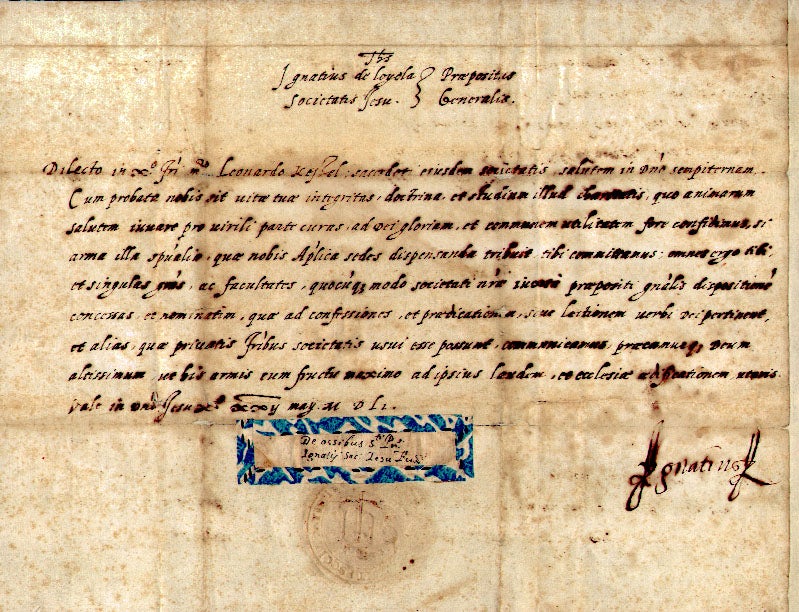
Certification of faculties for Rev. Leonard Kessel, S.J.
Loyola, St. Ignatius
[Rome?]
May 22, 1551
Kessel (1528-1574) was appointed at age 26 head of the Jesuit college in Cologne; shortly thereafter he experienced a vision of St. Ignatius, then still living in Rome. (GULSC)

Silver chalice and paten
England
1550-1600?
This chalice was used over a long period in the Lancaster family home at Rock Point, Charles County, Maryland. Made in two parts, its bowl has been repaired and makers' marks deliberately obliterated. (GUC)
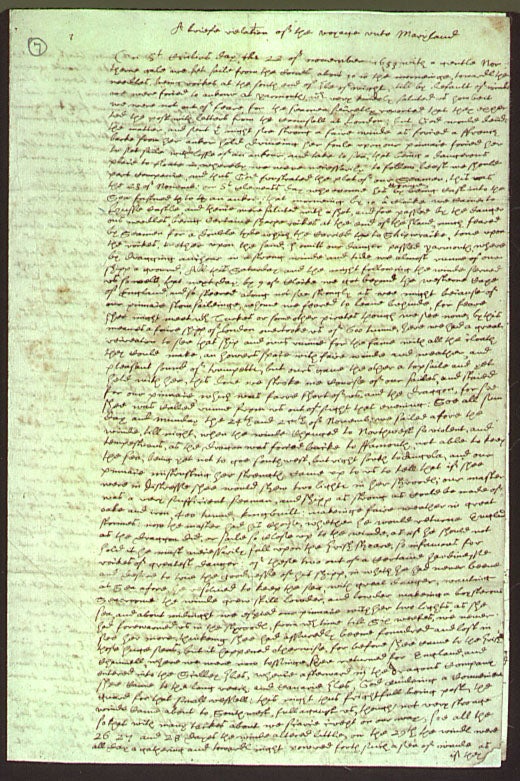
A briefe relation of the voyage unto Maryland
White, Rev. Andrew, S.J.
[Maryland?]
[1634?]
The case for Fr. White's authorship of this primary account of the settlement is overwhelming, though this manuscript is at best a secretarial copy of White's holograph. Its conclusion aptly states the high hopes of the nascent colony and mission: "the place abound not alone with pfit [profit], but also with pleasure +" (MHS)
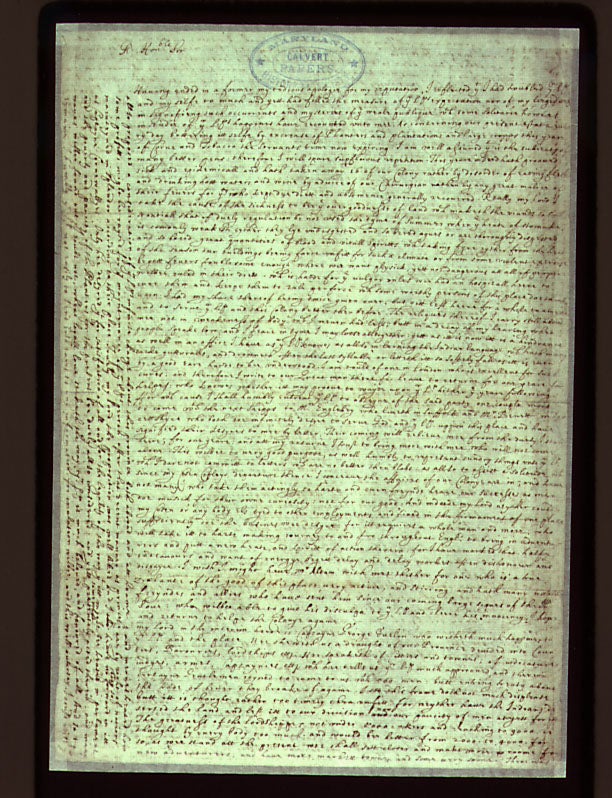
White, Rev. Andrew, S.J., to Lord Baltimore
Maryland
February 20, 1638
A very long letter in which Fr. White makes a special request for the recruitment of two more Jesuits who have written to him. Of particular note is the following reference to the Indian language and "a decay of my hearing":
...an office I have as yrLp knowes as allso in lerning the Indian language wch hath many darke gutturalls, and drowneth often the last syllable or letteth it so softely fall as itt is euen by a good eare harde to bee vnderstood." (MHS)
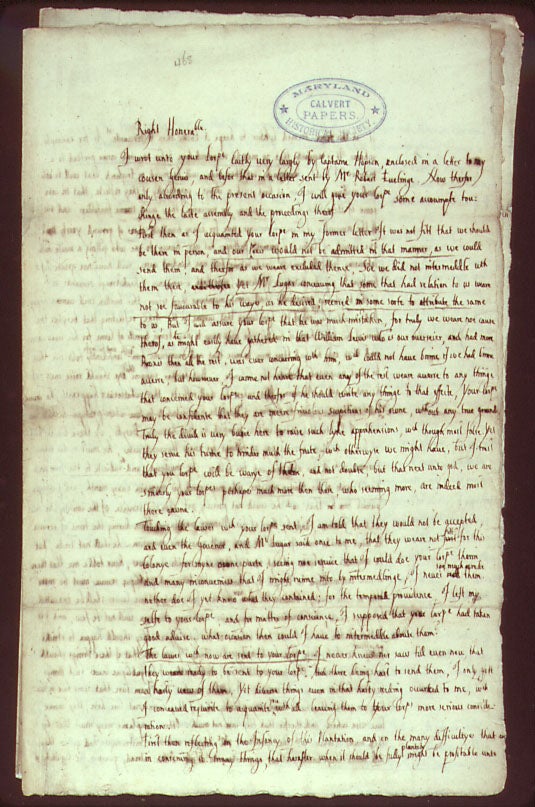
Fisher, Rev. Philip, S.J. (alias Thomas Copley), to Lord Baltimore
St. Mary's City
April 3, 1638
Baltimore's endorsement summarizes the contents: "heerein are demands of very extrauagant priuiledges." Fisher sought, "while the gouerment is catholique" to establish the right of sanctuary; to free the Jesuits from public taxes; to work toward the establishment of an ecclesiastical court; and to "freely goe, abide and liue amonge the Sauages, wth out any licence to be had here from the Gouernor, or any other." (MHS)
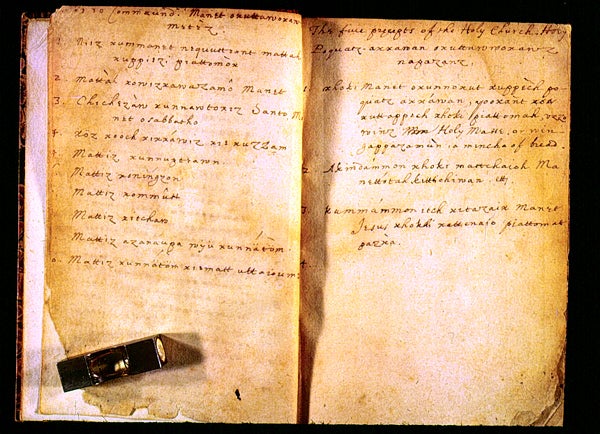
Manuale sacerdotum
Douai: L. Kellam
1610
STC 16159. On five pages bound at the front are drafts of prayers, the commandments, and the precepts of the Church written by Andrew White ca. 1640 in English, Latin, and Conoy (Piscataway). These fragments are all that is known to survive of extensive works by Fr. White in the language of the Piscataways. (GULSC)
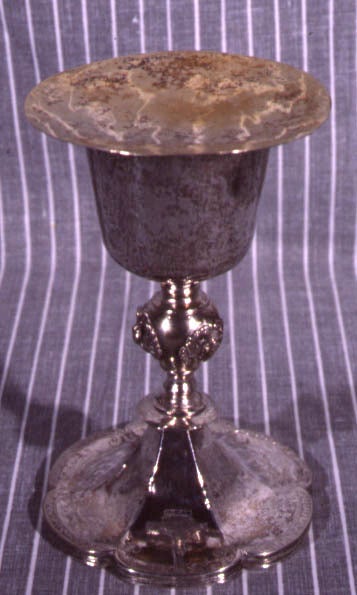
Silver chalice and paten
London, 1640-1641; and [Maryland? 1650-1700?] The chalice, used at Newtown perhaps as early as the 1650's, is taken over from a secular cup bearing London marks for 1640-1641 and a maker's mark also found on Church of England communion cups. Such conversions, as well as the use of base metal, helped alleviate the scarcity of church vessels. (GUC)

Grant of land to William Britton
Calvert, Caecilius, second Lord Baltimore
St. Mary's City
July 10, 1640
The original grant for Newtown, also known as "Britton's Neck." This parcel, together with another ("Britton's Outlet"), were purchased later in the century by Rev. Henry Pelham, S.J., for 40,000 lbs. of tobacco. Together with St. Thomas and St. Inigoes manors, Newtown was one of the principal Jesuit estates in southern Maryland. (MSJ)
Grant of land to Rev. Henry Pelham, S.J. (alias Henry Warren)
Calvert, Caecilius, second Lord Baltimore
St. Mary's City
February 2, 1670
Fr. Pelham, Superior in Maryland from 1661 to 1675, held in his own name much of the Jesuit estates. This grant conveyed to Pelham 4,000 acres in "St. Thomas his Mannor" on the Potomac near present-day Port Tobacco. (MSJ)
Rich Neck Manor, Talbot County, Md. Ink drawing
Dr. Yolanda Frederikse
ca. 1974
The manor includes a small brick building (right foreground) in the style of a 17th-century chapel. It is possible that the building dates from as early as 1650, and it is also possible that it was a Catholic chapel. (Frederikse)

Silver ciborium with cover
[Maryland?]
ca. 1710
The mark PE on the ciborium is not recorded in England; this is possibly the "silver challace with a cover" listed in the 1723 inventory of James Heath of Worsell Manor. The cover is a later replacement. (Carley)
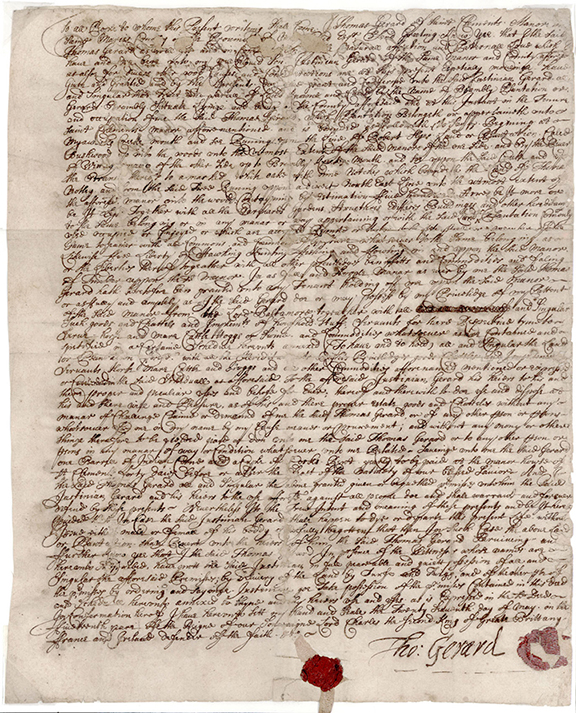
Deed of "Brambly" to Justinian Gerard
Gerard, Thomas
[N.p.]
May 27, 1663
The deed to "Brambly," a tract of 500 acres in St. Clement's Manor, including a detailed inventory of farm equipment and household goods; later part of the estate of the Plowdens, an early Catholic Maryland family. (GULSC)
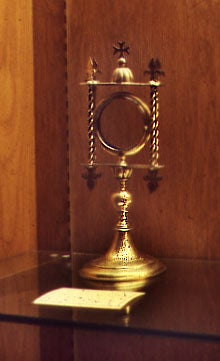
Silver gilt ostensorium
[Maryland?]
ca. 1700?
The base of this otherwise unmarked piece is engraved "Ora pro Georgio Tompsono." Thompson (fl. 1658-1663) was the first Clerk of Court in Charles County, Md., and the ostensorium was probably executed at his expense or at that of one of his near descendants. (GUC)
Calvert, Charles, third Lord Baltimore, to George Brent
London
October 20, 1687
An engaging attempt on Baltimore's part to recruit into Maryland his wife's son-in-law, George Brent, then residing in Virginia; Brent's relocation would be "a great credit to MaryLd." (GULSC)
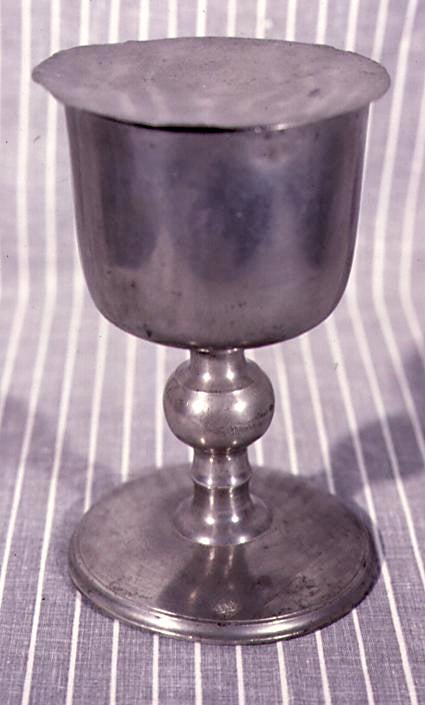
Pewter chalice and paten
[Maryland?]
ca. 1650-1700
Associated with the early Maryland missions by long tradition, this chalice is unusual in not being made of the customary silver and gilt; its mark RI has not been traced in England. Like the secular cup made into a chalice (8), this chalice of base metal was occasioned by the lack of suitable vessels in the missions. (GUC)
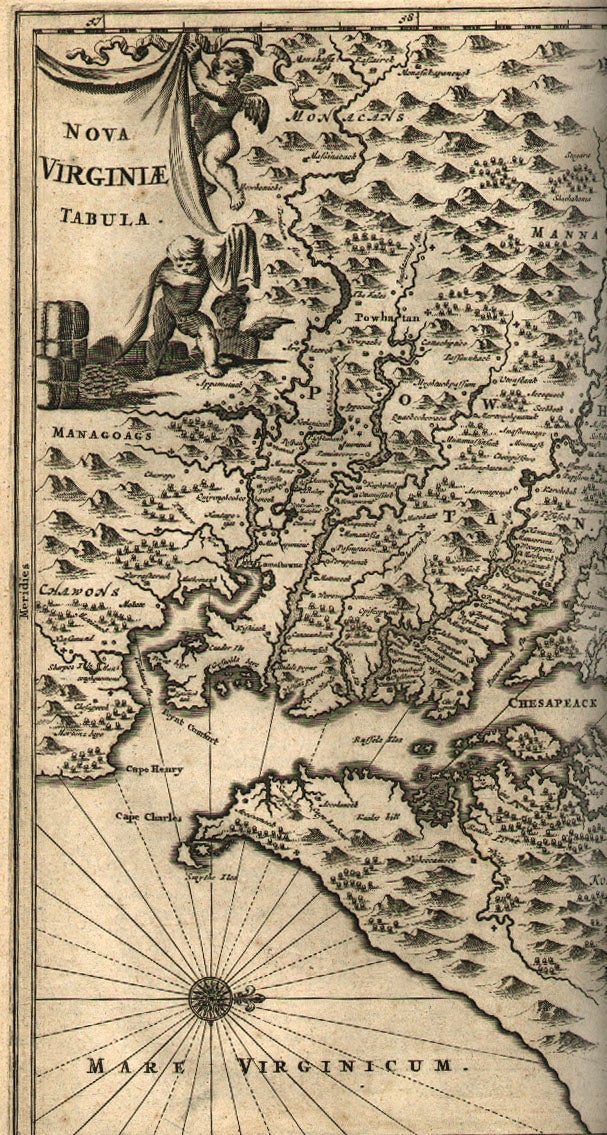
De nieuwe en onbekende wereld: af beschryving van America
Montanus, Arnoldus
Amsterdam: J. Meurs
1671
A very detailed early map of the area comprising what is now eastern Virginia, Maryland, Delaware, and southern Pennsylvania, showing "Iamestowne," but not the English settlements in Maryland. (GULSC)
Liberty and property, or the beauty of Maryland displayed, being a brief & candid inquiry into her charter, fundamental laws and constitution. By a lover of his country
Attwood, Rev. Peter, S.J.?
Maryland
ca. 1717-1720
Internal evidence suggests this essay was drafted between 1717 and 1720, when the Calverts resumed active control of the colony. Foreshadowing the Revolutionary literature of the 1770's, Attwood excoriates the Royal governors as "strangers to our Constitution" who "came to raise their own fortunes, not to advance ours." (GULSC)


The laws of the Province of Maryland
Philadelphia: A. Bradford
1718
Evans 1965. The institution of the Penal Laws after 1689 effectively reversed the position of Catholics in Maryland. A principal reason for the survival of Catholicism, however, was the official policy of permitting priests to say Mass in private homes, as shown here in an act of the session of March 26-April 15, 1707. (GULSC)

Archbishop John Carroll. Oil on canvas by Gilbert Stuart (unsigned).
Gilbert Stuart
ca. 1803-1805
The most famous likeness of John Carroll, commissioned by Robert Barry, a devoted friend. (GUC)
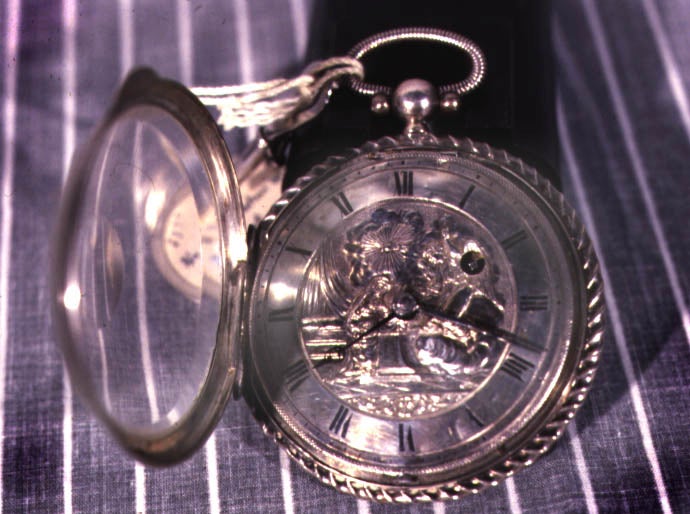
Silver pocket-watch
N.p.
before 1815
This watch belonged to Archbishop Carroll. Its place and date of manufacture have not been ascertained; the movement is unmarked, and the case bears the stamps GFT and 1363. (GUC)
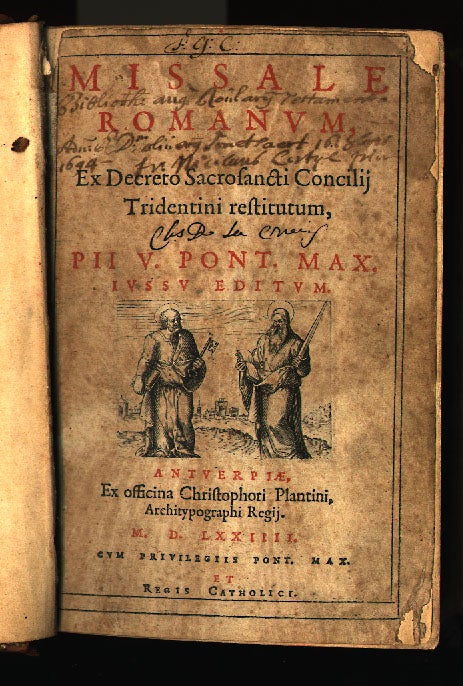
Missale romanum
Antwerp: Plantin
1574
An early octavo edition of the Tridentine missal. According to Bishop James Van de Velde and others, this was the missal used by John Carroll while attending the missions at Rock Creek. The binding is American, ca. 1825-1850. (GULSC)
Theological notes on the Sacraments, in Latin
Liège?
ca. 1765-1769
Though these notes, in the hand of John Carroll, are undated, it is likely that they are from the time of his theologate. As is the case in most of the "school manuscripts" (cf. 30) authorship is not ascribed, since they represent a cumulative effort of lecture, study, and annotation. see: The Catholic School Manuscripts Collections; and The Jesuit School Manuscripts Collection. (GULSC)
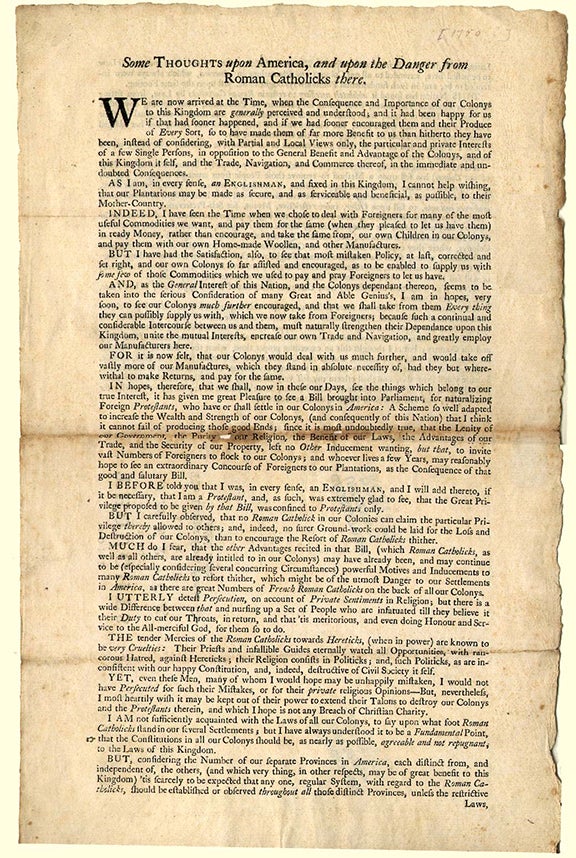

Some thoughts upon America, and upon the danger from Roman Catholicks there
London?
1739-1740
Sabin 86780. An anonymous broadside cautioning against the danger of allowing Catholics to settle in the English colonies. Declaring himself against religious persecution, the author stresses nonetheless the menace of a league between the Catholics of French Canada and those of the English colonies. (GULSC)
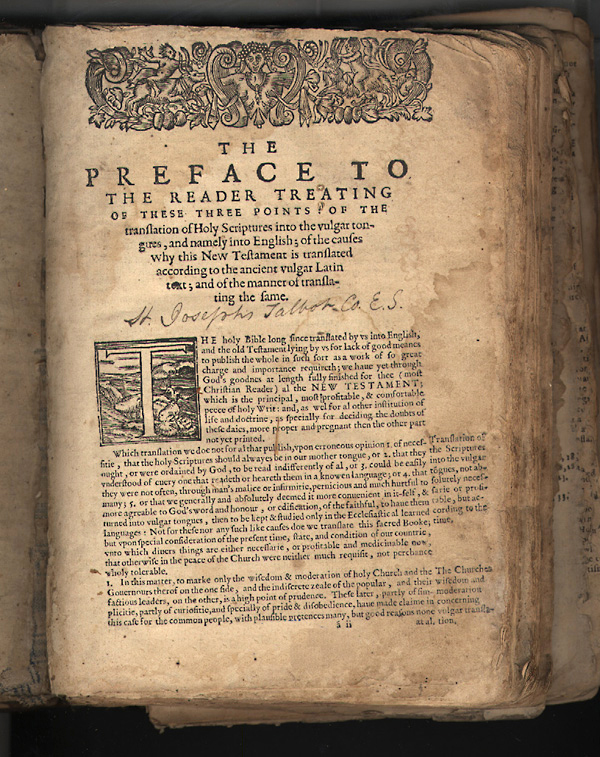
The New Testament
Rheims: J. Fogny
1582
(GULSC)
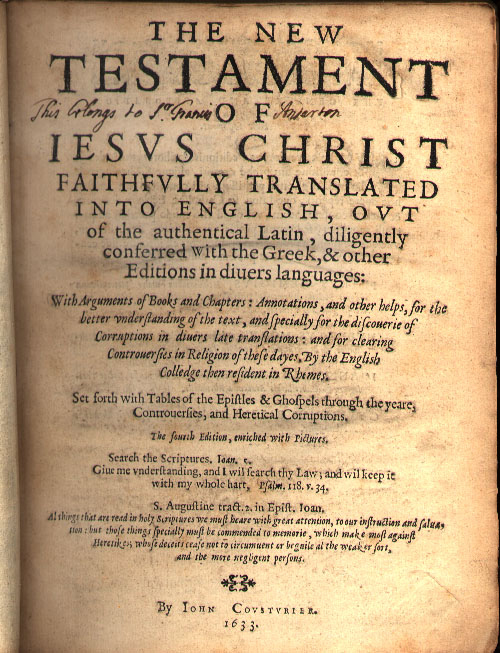
The New Testament
[Rouen]: J. Cousturier
1633
STC 2884 and 2946, the first and fourth editions of the Rheims version. Both volumes were part of the library of the Jesuit residence at St. Francis Xavier (Bohemia Manor) in the 18th century, as well as St. Joseph's in Talbot County. Catholic English Bibles and Testaments were so scarce that they were literally read to pieces (and repaired again, as is the 1633 volume shown here). Not until 1790 was the Rheims-Douay text printed in America. (GULSC)
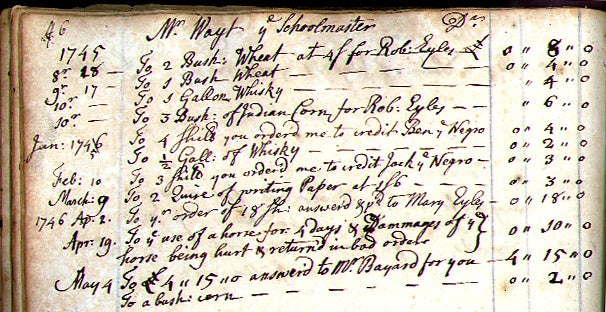

Ledger and day-book, Bohemia Manor
1735-1761
The Jesuits established their second Maryland school (the first ran briefly at Newtown in 1677) at Bohemia Manor, on the Eastern Shore at the head of Chesapeake Bay. John Carroll entered in 1745 to prepare for the Jesuit College of St. Omer in Flanders. The opening displayed shows the account of Mr. Wayte, the schoolmaster. (MSJ)
Grant of land to Major Peter Sayer
Calvert, Charles, third Lord Baltimore
St. Mary's City
June 1, 1685
Part of Worsell Manor, the subject of this grant, subsequently (1728) passed to Rev. Peter Attwood, S.J. and was incorporated into what the Jesuits called "Bohemia Manor." (GULSC)
Silver chalice and paten
England
ca. 1670
The history of this chalice can be traced back to the Peter Sayer (d. 1697) who received the grant of Worsell Manor in 1685 (cf. 28). Typically English, its mark TP in a shield has not been associated in the past with work done for the English recusants. (Carley)
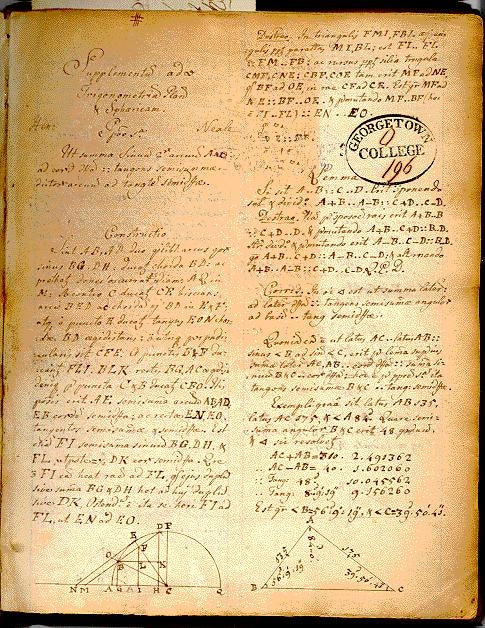
Collection of mathematical treatises and notes, in Latin and English
N.p.
ca. 1720
This manuscript is associated by tradition with Rev. Henry Neale, S.J., recognized as a talented mathematician, who died in Philadelphia in 1748. Such manuscripts, derived from lectures in the European Jesuit colleges, often served in place of printed books both for teaching and for reference. (GULSC)
Record book, Maryland Mission
V.p.
1724-1815
The "Old Records" represents an early effort at codifying the history of the Maryland Mission. Begun by Peter Attwood in the 1720's, it includes a comprehensive list of lands held by the Society; a summary of ecclesiastical faculties and privileges; a list of births of slaves on St. Thomas Manor; and a list of Jesuits who served on the mission, 1632-1815. (MSJ)
To the Hon:ble the Upper House of Assembly of the Province of Maryland. The petition of sundry Ro. Catholics on behalf of themselves and others of the same communion residing in the Province aforesaid
April 10, 1756
Docketed by Charles Carroll (MSJ)
Ridout, John [secretary to the Governor], to Charles Carroll, Basil Waring, Clement Hill, and Ignatius Digges
Annapolis
May 12, 1756
(MSJ)
Carroll, Charles, to Ignatius Digges, Basil Waring, and Clement Hill
[n.p.]
May 13, 1756
(MSJ)
A list of papers sent to England in defense of the Roman Catholics of Maryland
Carroll, Charles
N.p.
1756
The lower house of the Maryland assembly increased its attacks on Catholics after 1750; its measures were generally blocked by the Upper House and Council. Charles Carroll, the father of the Signer, led the Catholic petitioners against these measures. The petition displayed proclaims the loyalty of Catholics, yet "We are informed a Bill is now before yor Hon:rs by a Clause of which the lands of all Ro. Cats are doubly taxed." On May 12 John Ridout denied knowledge of such a bill in the name of the Governor, who suggested a petition to the lower house should such a bill appear there. Yet the engrossed bill passed both houses on May 15. Faced with this duplicity, Carroll refused to join in petitions to the lower house. We find Carroll's comments in his list of documents sent to England: "Oh, the sagacious, merry and witty Govr! who ordered his clerk to write to me . . . to oppose a law which passed the House the day Mr. Ridout wrote his letter . . . Most governors find their Lower Houses of Assembly assuming powers . . . [the Governor's doctrine] would make the Upper house and Governor cyphers."
Missale romanum
Goshenhoppen mission?
ca. 1745
One of two missals copied out by Rev. Theodore Schneider, S.J., founder of the mission at Goshenhoppen (now Bally), Pa., in 1741. The scarcity of Catholic devotional and liturgical works was a constant problem until well into the 19th century. (GULSC)
Ledger, St. Thomas Manor
1755-1817
The ledger is in very poor condition. The leaf displayed lists tenants and their rents ca. 1755. The yearly income of the manor is difficult to tally, but appears to have totalled 40 fowl, 21,050 lbs. of tobacco, and 1,050 lbs. of pork. (MSJ)
Silver chalice and paten
England
ca. 1650-1670
The early history of this two-piece chalice is not known. It is of a relatively common type, though the maker is not identified. Chalices of this sort would have been, perhaps, those most frequently used in the Maryland missions and among Maryland Catholic families. (GUC)
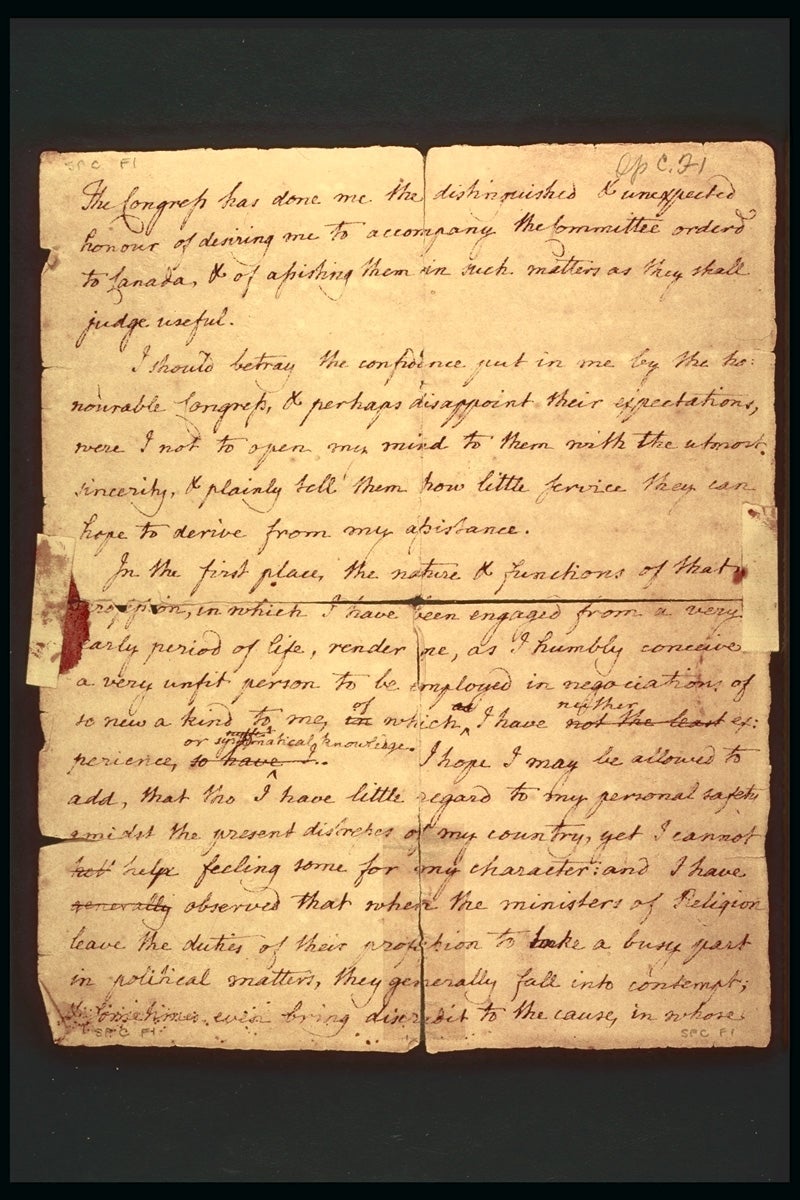
Carroll, John, to the Continental Congress
[n.p.]
1776
(Incomplete retained copy) In February, 1776, the Congress asked Carroll to accompany Benjamin Franklin, Samuel Chase, and Charles Carroll to Montreal with the aim of securing the neutrality, if not the active assistance, of the Canadians. Carroll reluctantly accepted the commission: "I have observed that when the ministers of Religion leave the duties of their profession to take a busy part in political matters, they generally fall into contempt." (BCA)
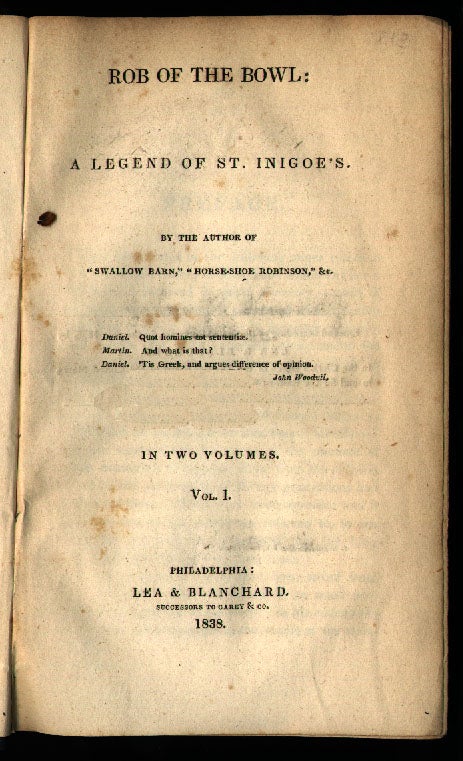
Rob of the Bowl: A Legend of St. Inigoe's
Kennedy, John Pendleton
Philadelphia: Lea & Blanchard
1838
First edition of a novel set in St. Mary's County in 1681; central to its action is the continuing rivalry of Catholic and Protestant factions in the colony. Parrington called it "one of the most finished and delightful of our earlier romances. (GULSC)
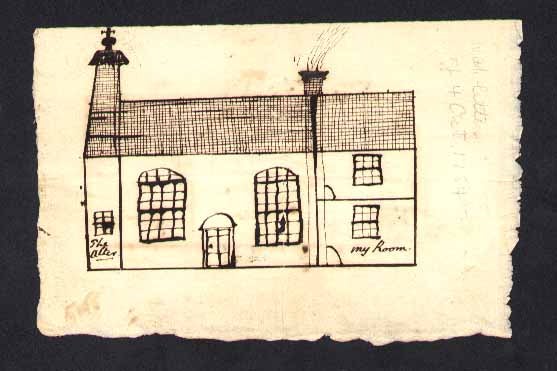
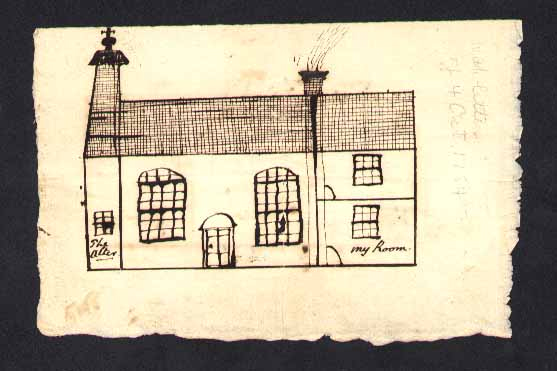
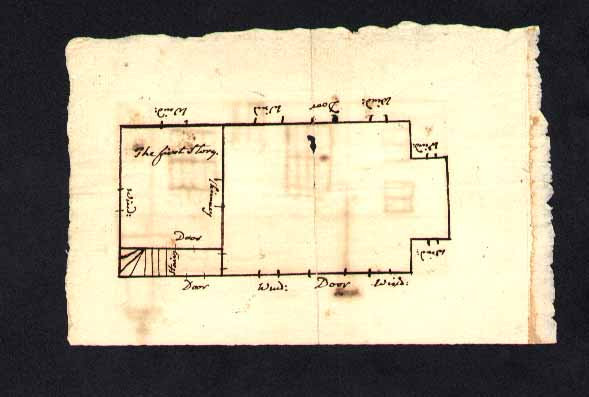
Sketch of St. Joseph's, Talbot County, Maryland
Rev. Joseph Mosley
Rev. Joseph Mosley, S. J, was born in Lincolnshire on November 16, 1731. He came to Maryland in 1758 and in 1765 established the mission of St. Joseph's in Talbot County, remaining there until his death in 1787. His life is typical of the missioners serving isolated congregations. Sixteen letters to his sister in London, Mrs. Dunn, survive. The entire collection is available here.

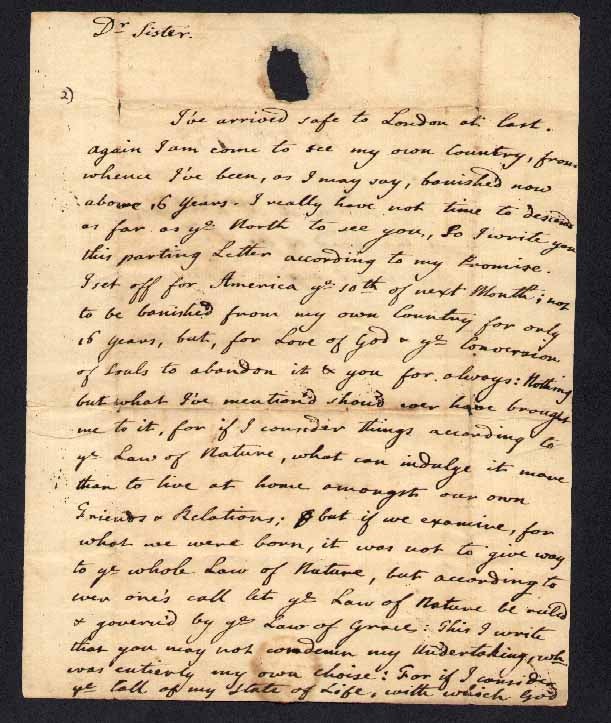
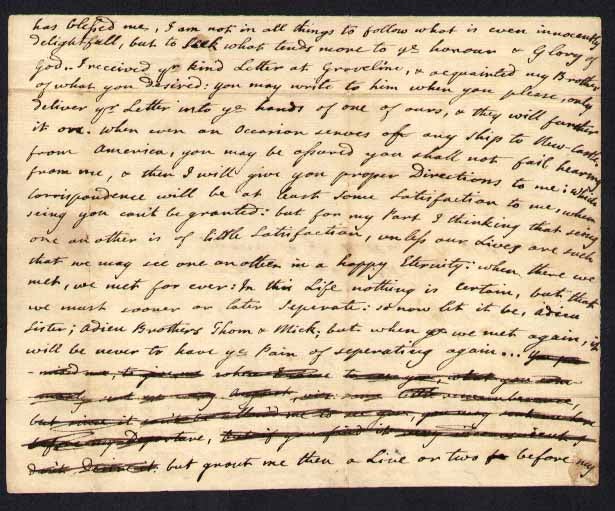
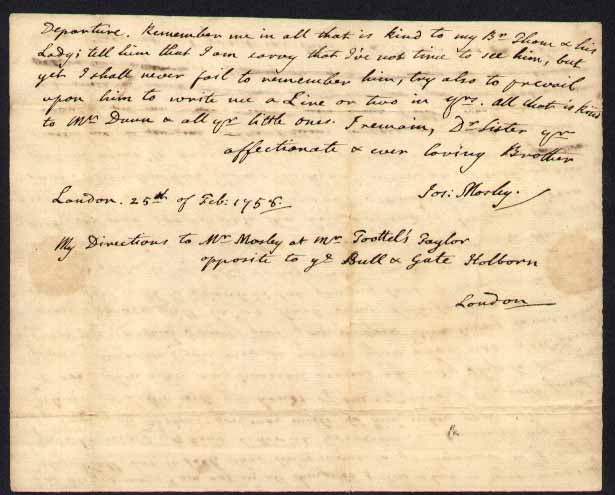
Mosley, Rev. Joseph, to Mrs. Dunn, Newtown
September 8, 1758
Mosley's first letter after his arrival in Maryland: "I find here business enough on my hands in my Way of Trade - I've care of some fifteen hundred souls"


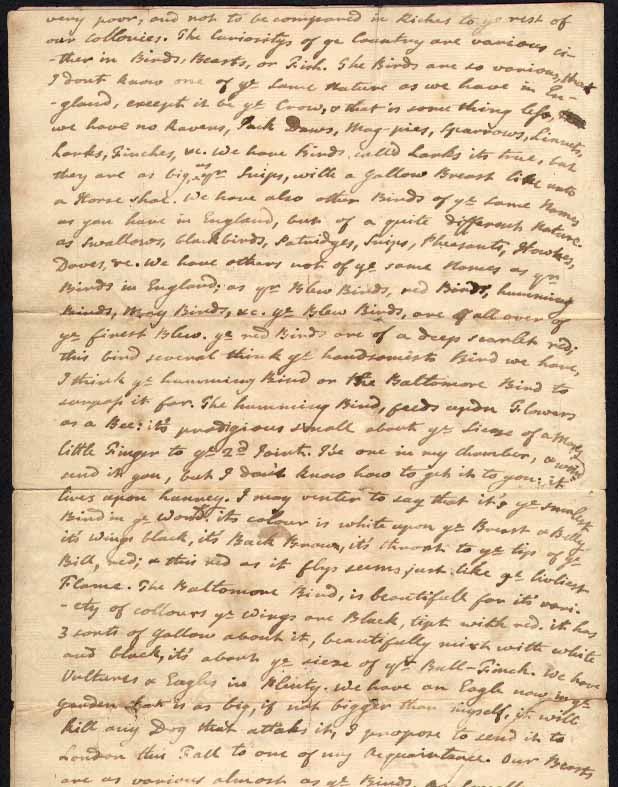
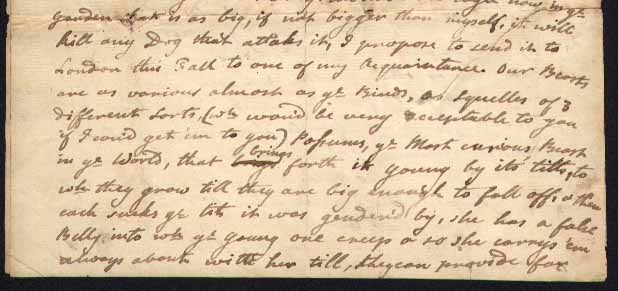
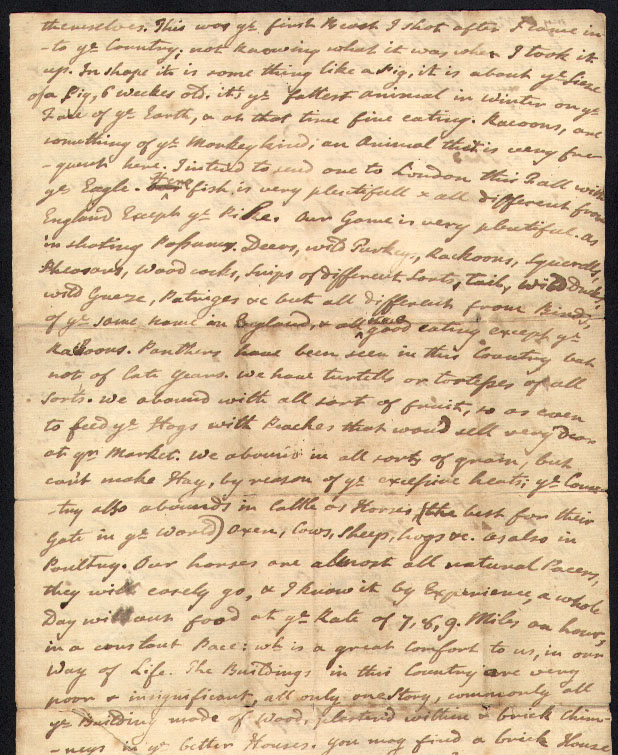
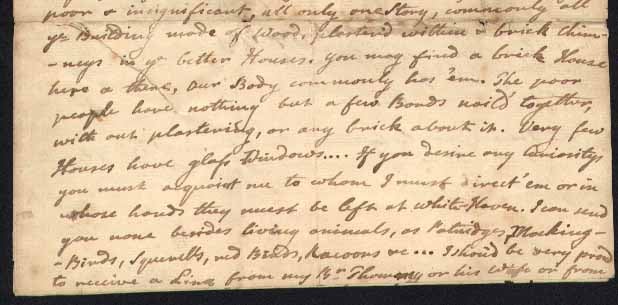
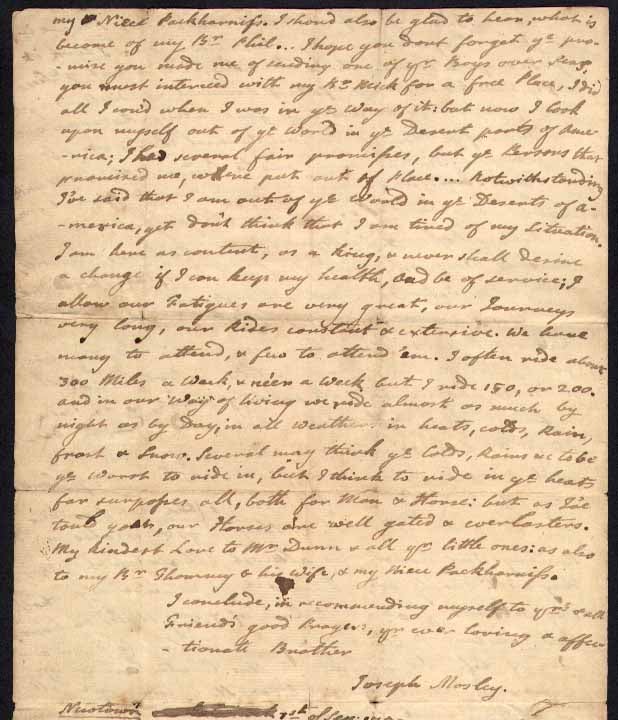
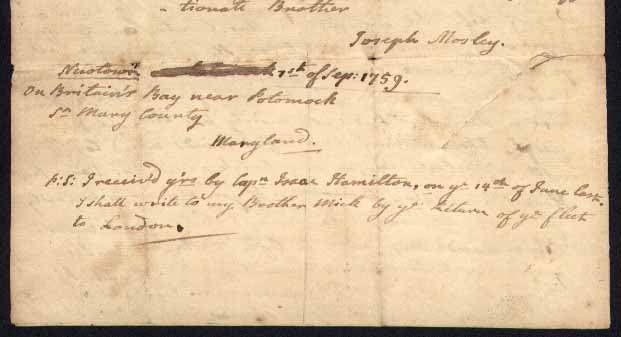
The same to the same, Newtown
September 1, 1759
"You desire a short account of this part of America." Mosley describes the land in some detail. He was particularly fond of the horses: "Our horses are almost all natural pacers; they will easily go . . . a whole day without food, at the rate of 7, 8, 9 miles per hour..."
Day-book
Mosley, Rev. Joseph
1764-1768
This small day-book gives a brief account of the establishment of St. Joseph's and lists Mosley's expenses and travels. The opening displayed shows expenses, including a donation to the French displaced from Acadia, and lists books loaned to the congregations. (MSJ)
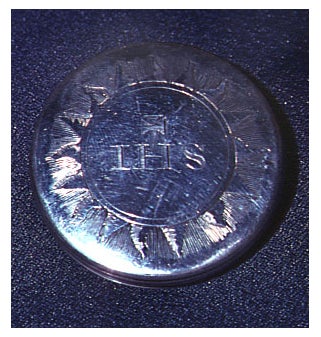
Silver pyx
Abingdon, Harford County, Md.: Joseph Toy
ca. 1776-1787
Almost certainly used by Rev. Joseph Mosley; marked (twice) with Toy's IT mark. (Carley)
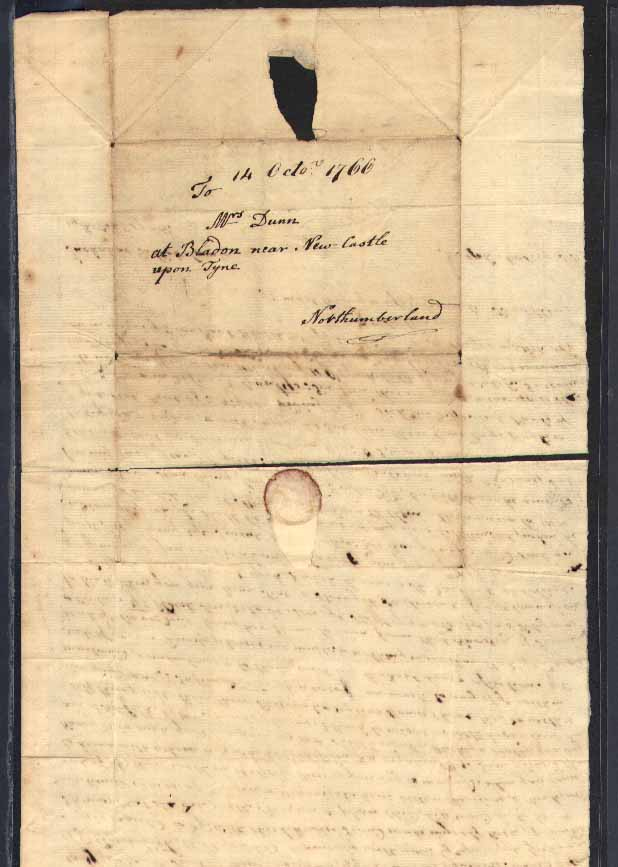
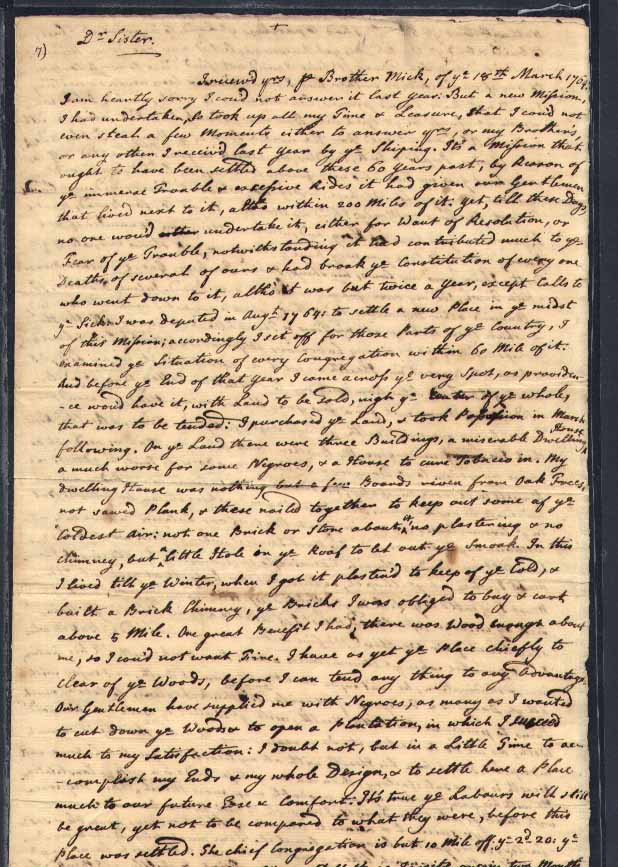
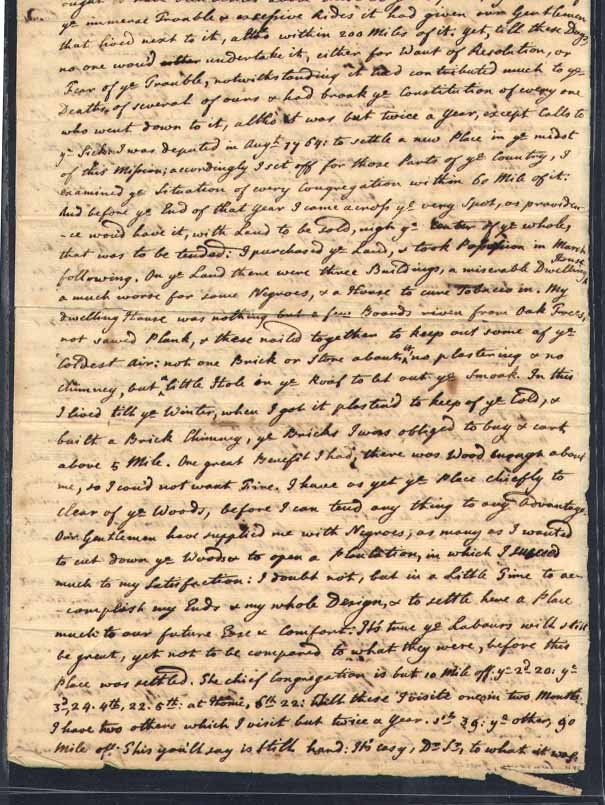
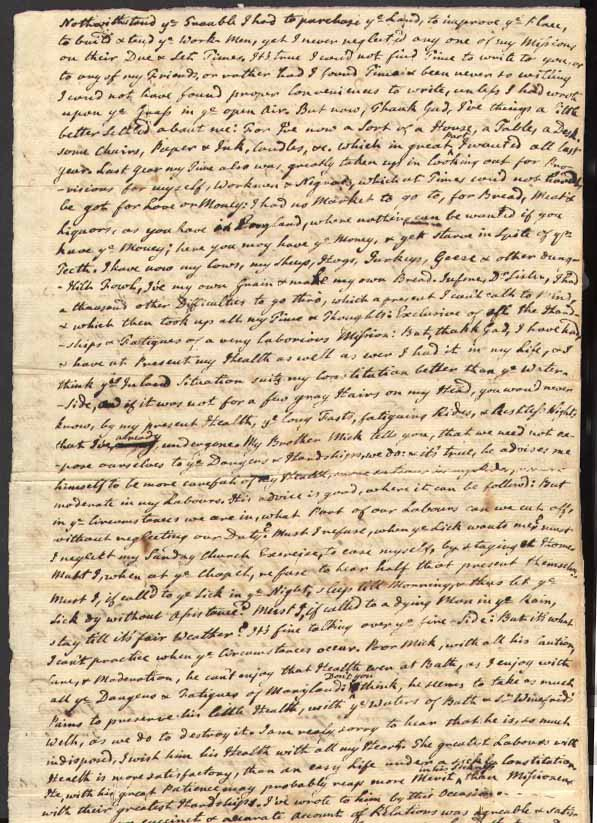
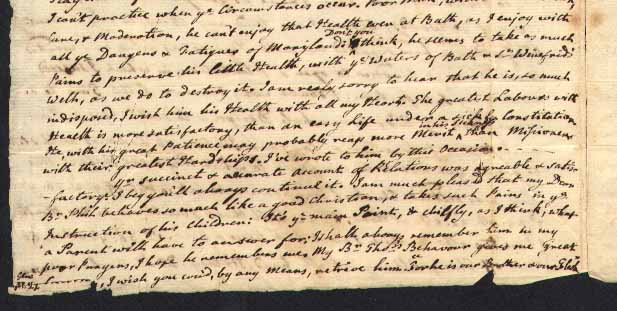
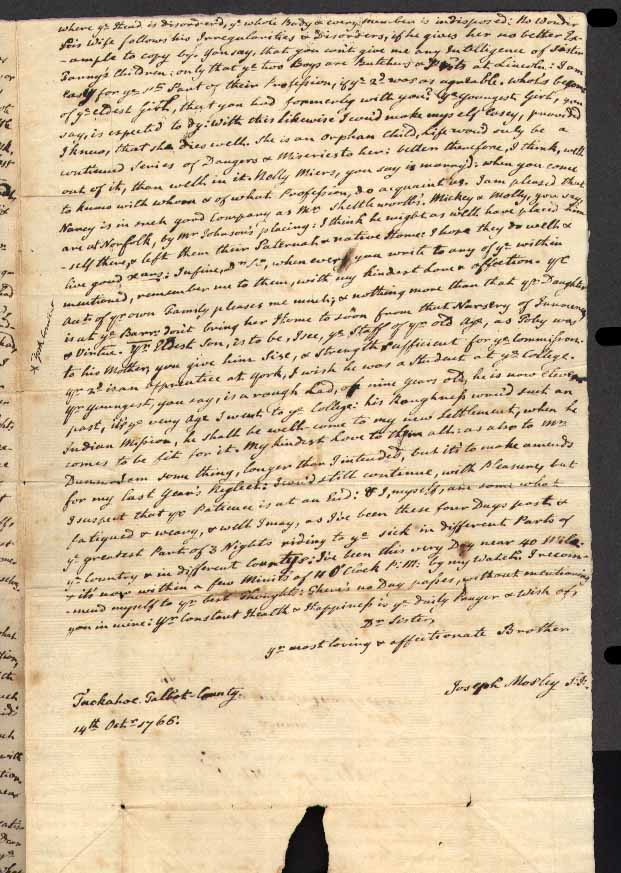
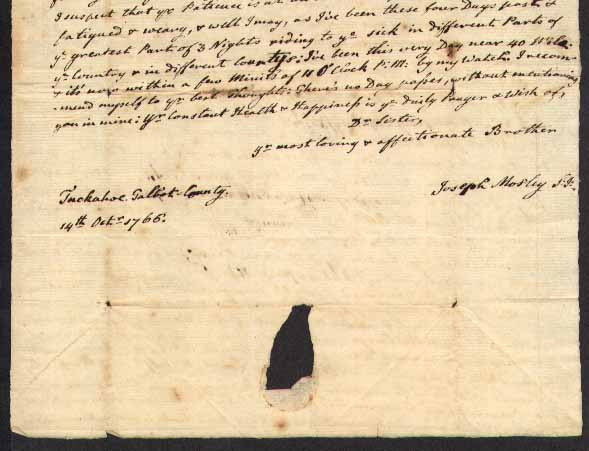
Mosley, Rev. Joseph, to Mrs. Dunn, Tuckahoe, Talbot County, Md.
October 14, 1766
Mosley describes his new mission: "On the land there were three buildings, a miserable dwelling-house, a much worse for negroes, and a house to cure tobacco in. . . . The Chief Congregation is but ten mile off; 2nd, 20; the 3rd, 24; 4th, 22; 5th, at home; 6th, 22. All these I visit once in two months."
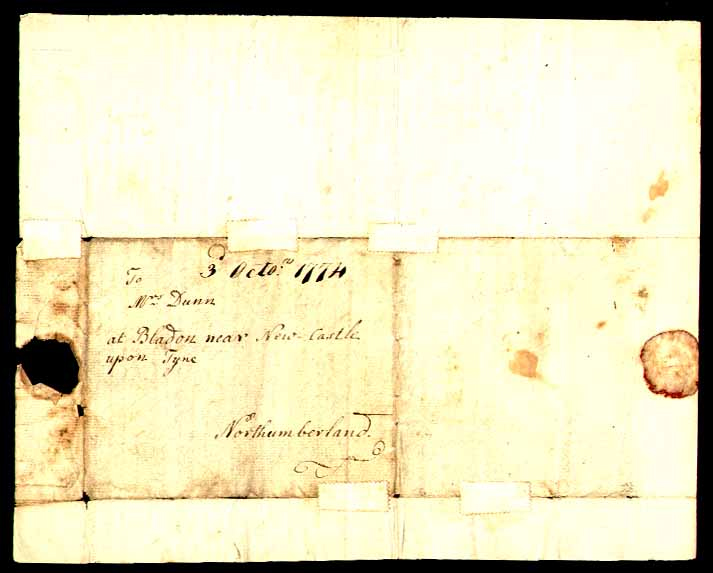
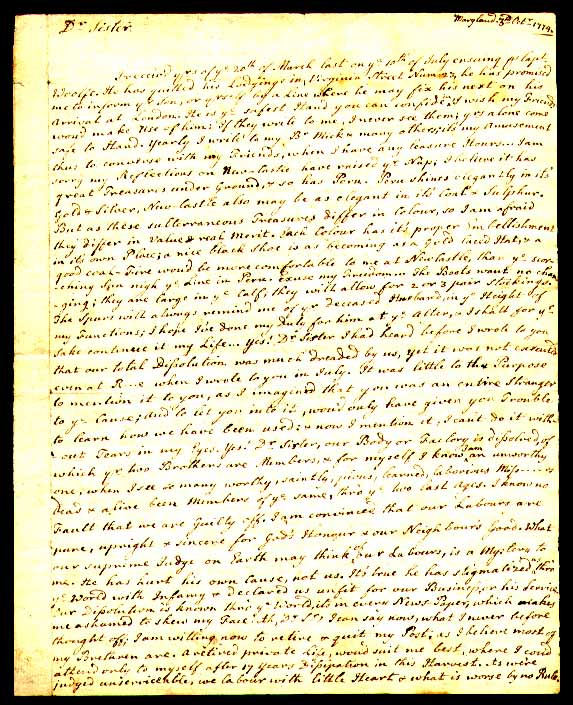
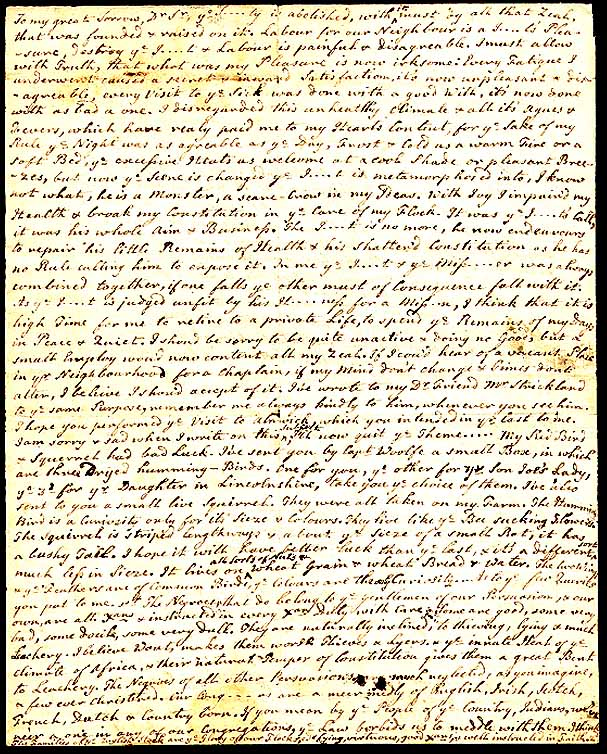
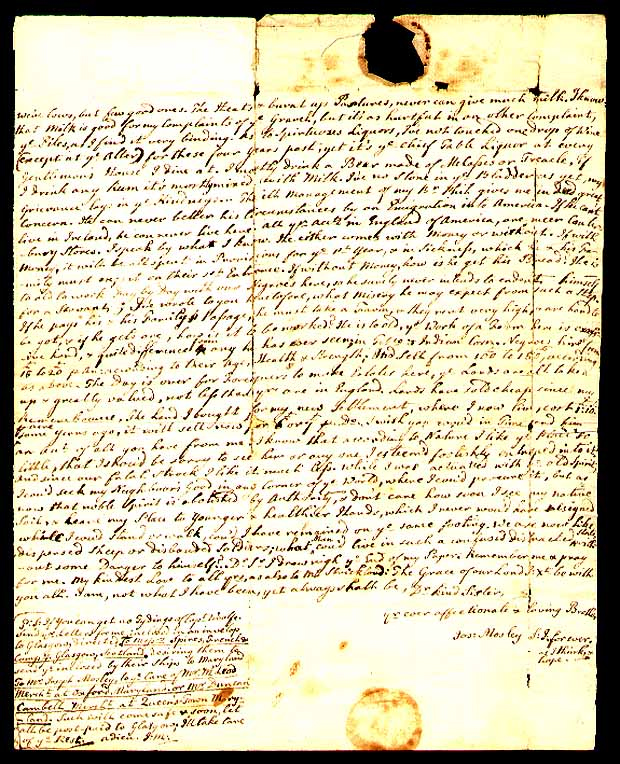
The same to the same, Maryland
October 3, 1774
Mosley provides a graphic description of the impact of the suppression of the Society on the Jesuits in Maryland: "I must allow with truth, that what was my pleasure is now irksome; every fatigue I underwent caused a secret and inward satisfaction; it's now unpleasant and disagreeable. . . . As the Jesuit is judged unfit by his H.. ness for a Mission, I think that it is high time for me to retire to a private life."
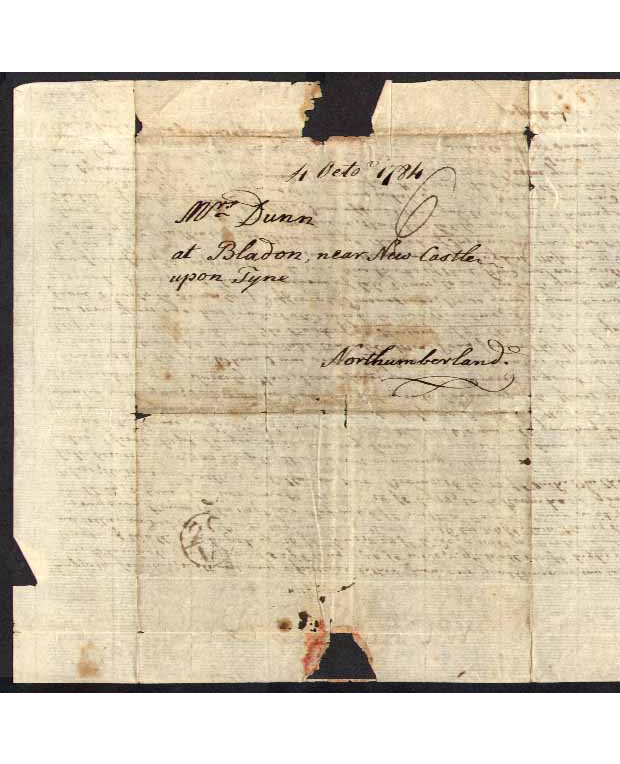
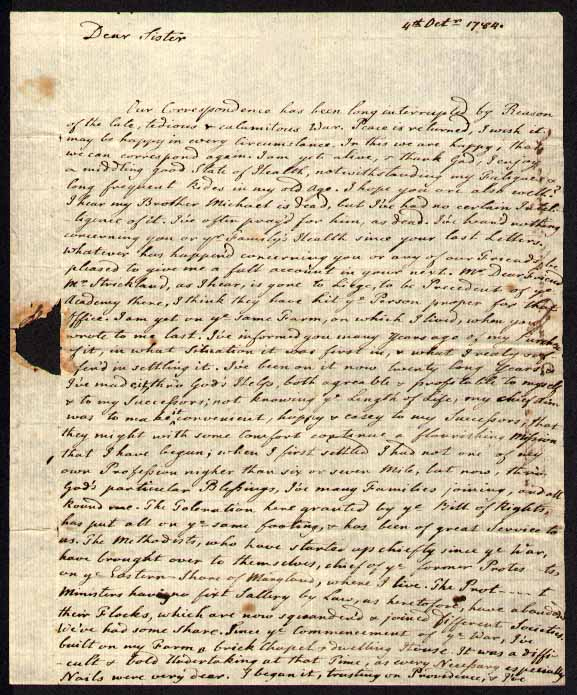
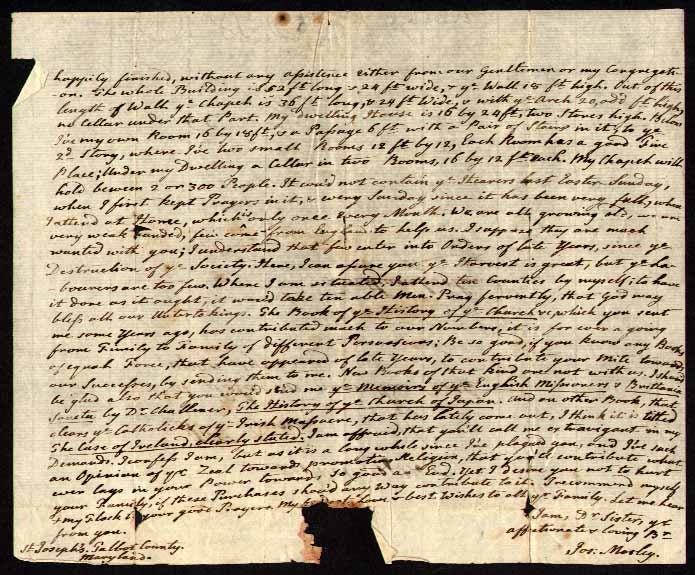
The same to the same, St. Joseph's, Talbot County, Md.
October 4, 1784
Drawing of the chapel and residence enclosed. Mosley did not retire to a private life: "Since the commencement of the war, I've built on my farm a brick chapel and dwelling-house....I've happily finished, without any assistance either from our Gentlemen or my Congregation." Chapel and residence were under one roof, an arrangement adopted in several mission stations to evade the provision of the Penal Laws which forbade public places of worship for Catholics.
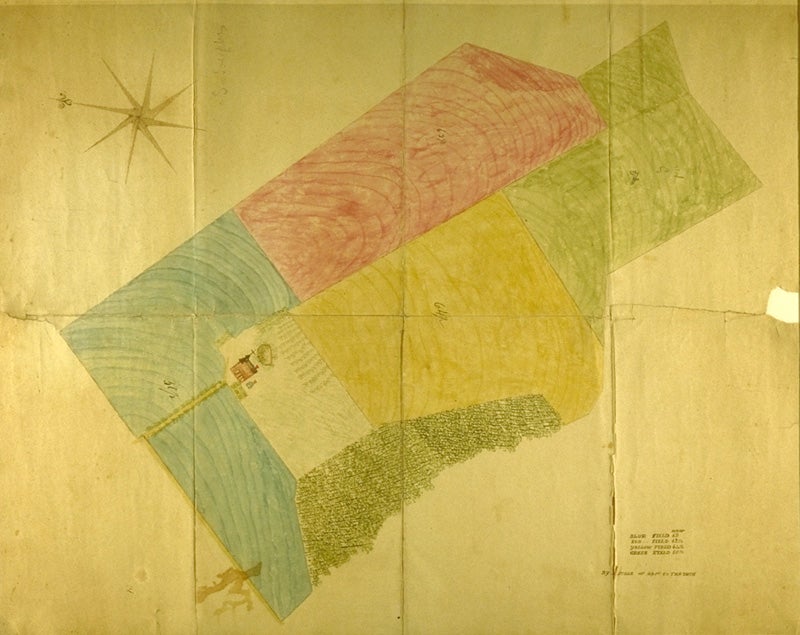
Plat of land, St. Joseph's Mission, Talbot County, Md.
ca. 1784
"The land I bought . . . cost £1-10 per acre some years ago: it will sell now for £6 and 7 per ditto." (Mosley to Mrs. Dunn, October 3, 1774) (MSJ)
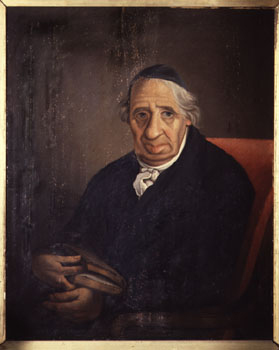
Rev. Francis Neale, S.J. Oil on panel
unknown artist
ca. 1814-1820
This portrait of Fr. Neale, twice president of Georgetown and one of its first teachers, is probably a copy after an original by J.P. de Clorivière, who painted a number of the Maryland clergy. (GUC)
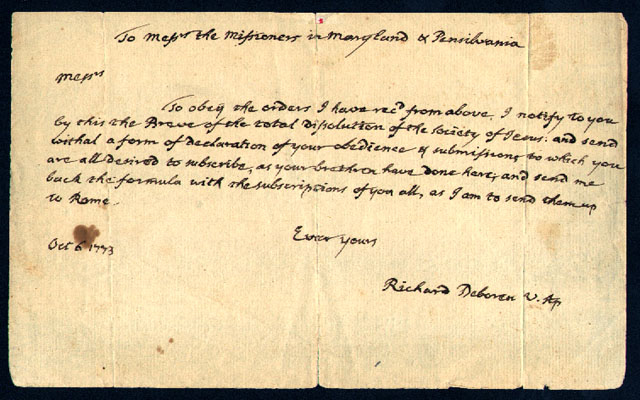
Challoner, Richard, Vicar Apostolic of London and Bishop of Debra, to the Jesuits of the Maryland Mission
[n.p.]
October 6, 1773
Conveying notice of the suppression ordered by Clement XIV: "To obey the orders I have rec[eive]d from above, I notify to you by this the Breve of the total dissolution of the Society of Jesus...." (MSJ)
Carroll, John, to Rev. Charles Plowden, Maryland
February 20, 1782
Nine years after the suppression, the Jesuits had still taken no steps to organize, and Carroll became increasingly frustrated by their failure to deal with their situation. Charles Plowden, a prominent English Jesuit, was a life-long correspondent of Carroll, and their letters are a major source for the history of Anglo-American Catholicism from 1779 to 1815 (MSJ)
Proceedings at a meeting of some of the Clergy in Maryland begun & held at the White Marsh
June 27, 1783
"The object of this meeting is agreed to be, to establish a form of government for the Clergy & to lay down rules for the administration and preservation of their property." At Carroll's initiative six former Jesuits met near present-day Bowie to organize a representative body of the clergy. (BCA)
Carroll, John, to Rev. Charles Plowden, Maryland
September 26, 1783
"You have adopted the language of some of the prints on your side the water by representing us as under imperious leaders, & the trammels of France: but alas! our Imperious leaders, by whom I suppose you mean the Congress, were at all time amenable to our particular assemblies, elected by them every year, often turned out of their seats...." Carroll was an enthusiastic supporter of American independence. (MSJ)
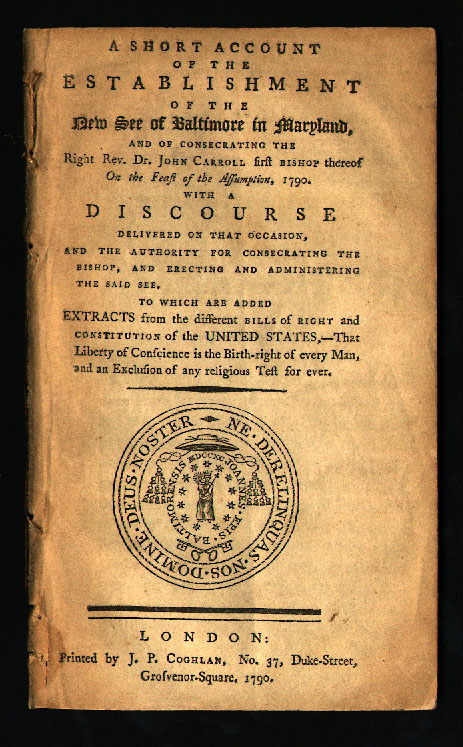
A short account of the establishment of the new See of Baltimore
Plowden, Rev. Charles, S.J.
London: J.P. Coghlan
1790
First edition. Of principal interest is the crucial portion of the authority granted by Pius VI for constituting the new See: "the priests who lawfully exercise the sacred ministry and have care of souls in the united States of America, should be empowered . . . to determine . . . who of the aforesaid priests appeared the most worthy and proper to be promoted to this important charge, whom We, for this first time only, and by special grace permitted the said priests to elect and to present to this apostolical See." (GULSC)
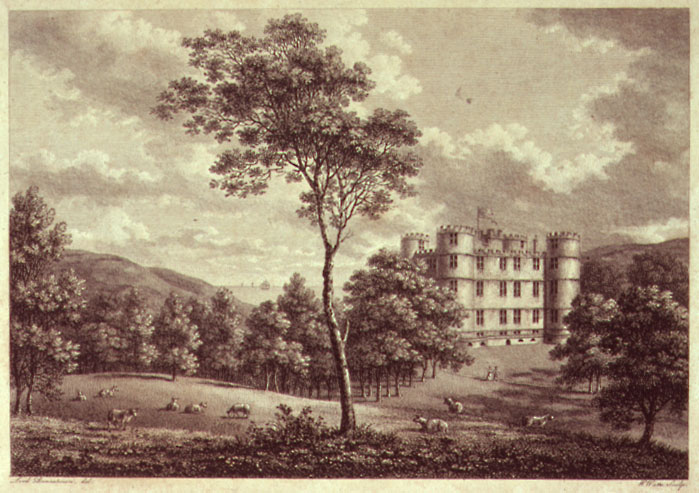
Lulworth Castle in Dorsetshire, the Seat of Humphrey Weld, Esqr.
W. Watts, Chelsea.
April 1, 1785
Publish 'd as the Act directs View of the site of the consecration of John Carroll as first Bishop of Baltimore; engraved from the drawing by Lord Duncannon. (GULSC)
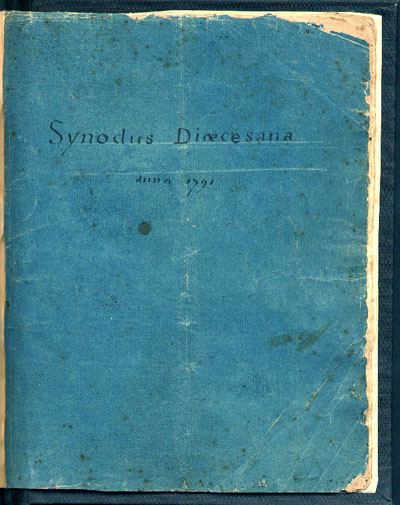
Minutes of the First Diocesan Synod, Baltimore
November 7-10, 1791
Twenty-two priests from Boston to southern Maryland gathered to enact legislation concerning the discipline and administration of the American Church. Rapid expansion of the Catholic community led the participants to consider at once the creation of an additional diocese. This synod was the culmination of Carroll's efforts to organize the Church in America. (Woodstock)
Carroll, John, to Rev. Charles Plowden, Baltimore
June 1, 1792
"Mr. Thomas Sim Lee, who embraced the Catholic faith about four years ago, and is a zealous observer of its precepts, is lately chosen Governor of this state." To Carroll, this was striking "proof of the decay of religious prejudice" following the Revolution. (MSJ)
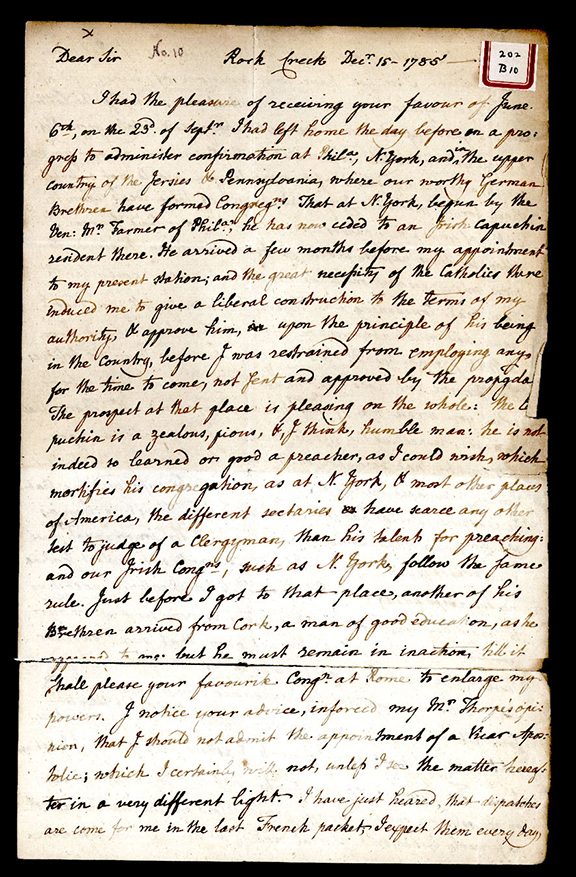
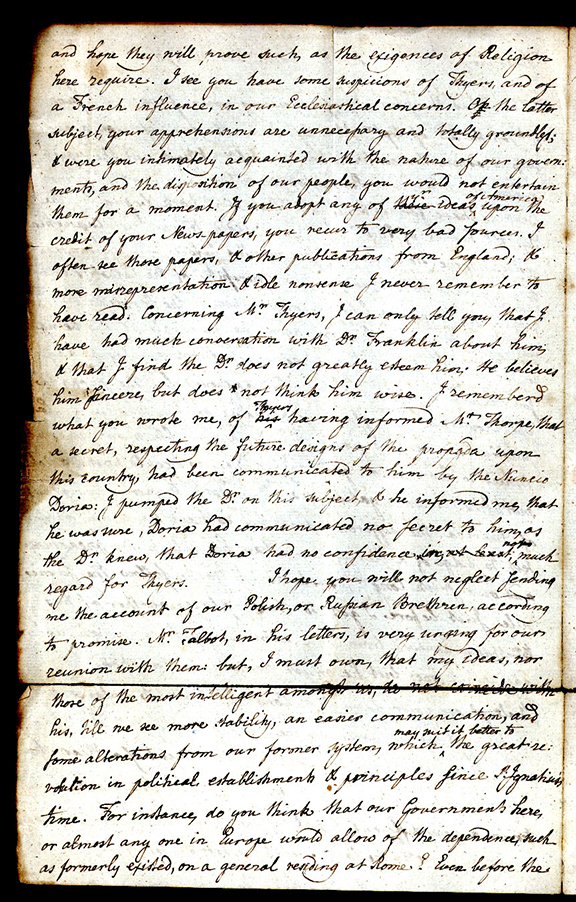
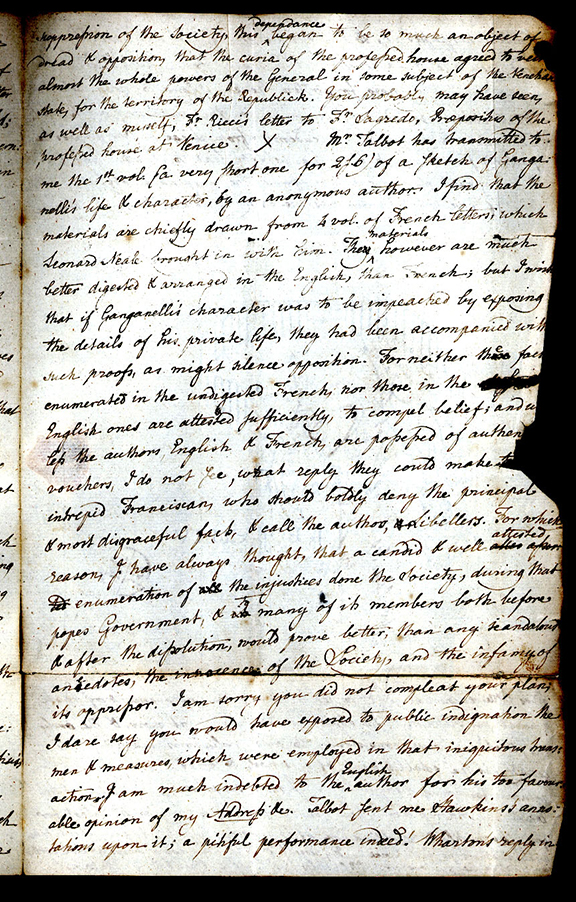
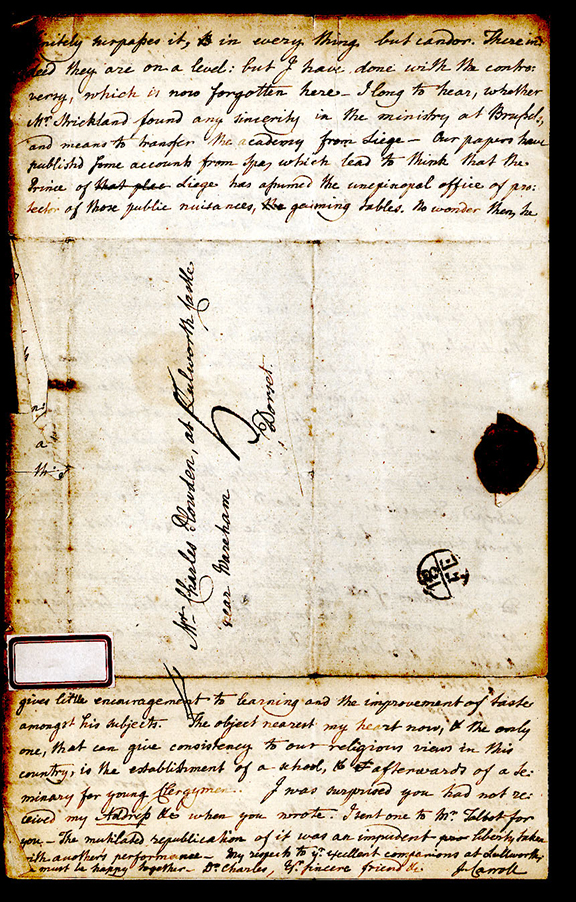
Carroll, John, to Rev. Charles Plowden, Rock Creek
December 15, 1785
John Carroll planned to establish an American Catholic college as early as 1783. Fund-raising began and land was acquired in 1787, and building commenced in 1788. The first student, William Gaston, arrived in 1791. "The object nearest my heart now & the only one that can give consistency to our religious views in this country, is the establishment of a school..." (MSJ)
The same to the same, Rock Creek
January 22-February 28, 1787
"We have now two great undertakings in hand for the success of which we stand in need of every support and best advice of the friends of religion. We have resolved to establish an academy for the education of youth; and to sollicit the appointment of a diocesan Bishop." Carroll asks for detailed advice about the organization and curriculum of the school and describes the opposition of those who did not wish to alienate the property held in anticipation of the restoration of the Society. Carroll took the larger view: "I hope they will soon change their minds, and remember . . . that the Society was instituted to save souls; & that souls were not made subservient to the temporal benefits of the Society." (MSJ)
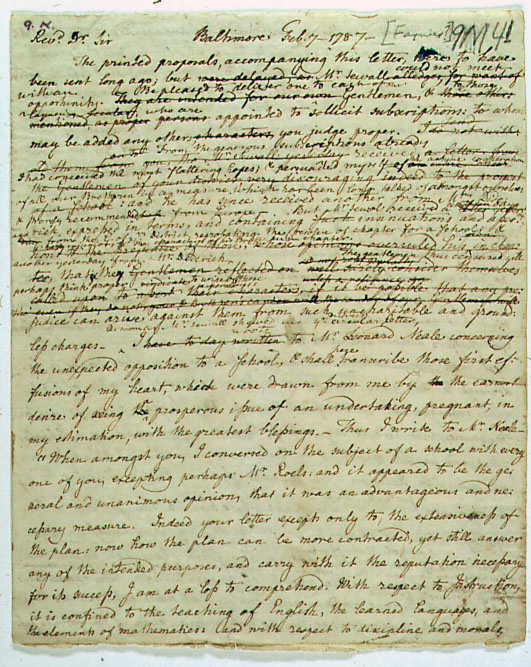
Carroll, John, to the Gentlemen of the Southern District, Baltimore
February 7, 1787
(Retained copy) Answering objections raised to the school, Carroll provides a clear description of its intended scope: "With respect to Instruction, it is confined to the teaching of English, the learned languages, and the elements of mathematics." (BCA)
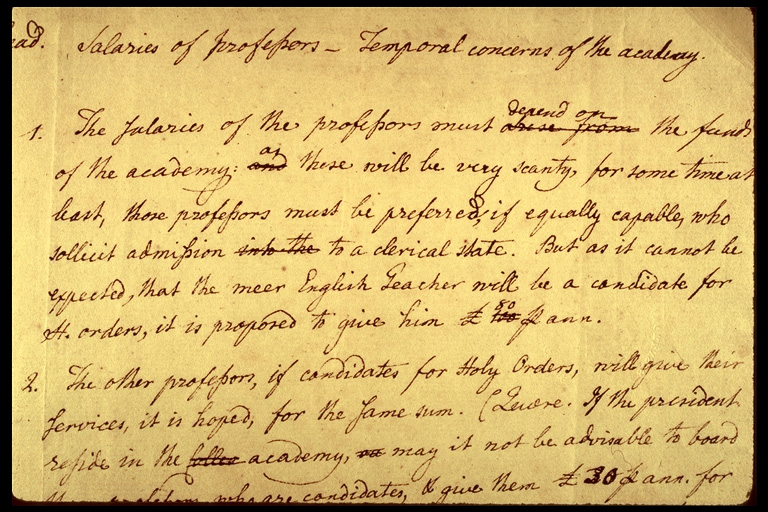
Plan for the academy
Carroll, John
N.p.
1789?
As this document indicates, Carroll planned the school in great detail. Pages displayed detail the general government of the academy and the salaries of the professors: "But as it cannot be expected that the meer English Teacher will be a candidate for H. orders, it is proposed to give him £80 p. ann." Carroll first wrote "£100 p. ann." (BCA)
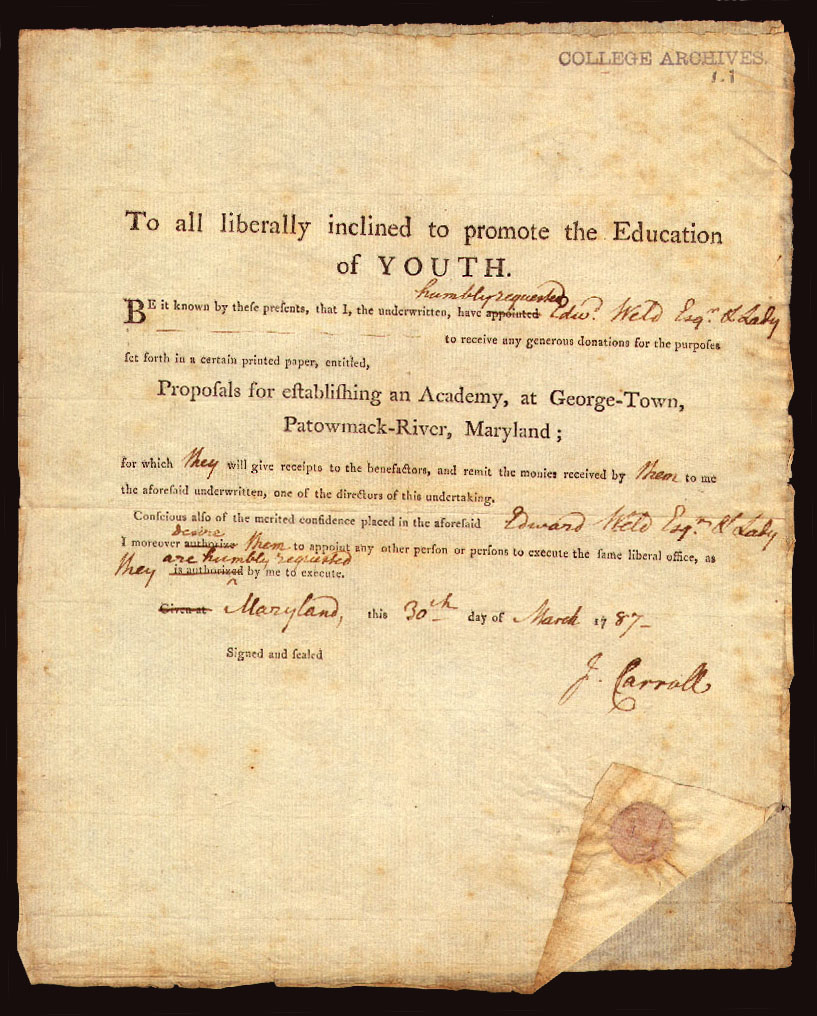
To all liberally inclined to promote the education of youth
[Baltimore?]
[1786?]
(GUA)
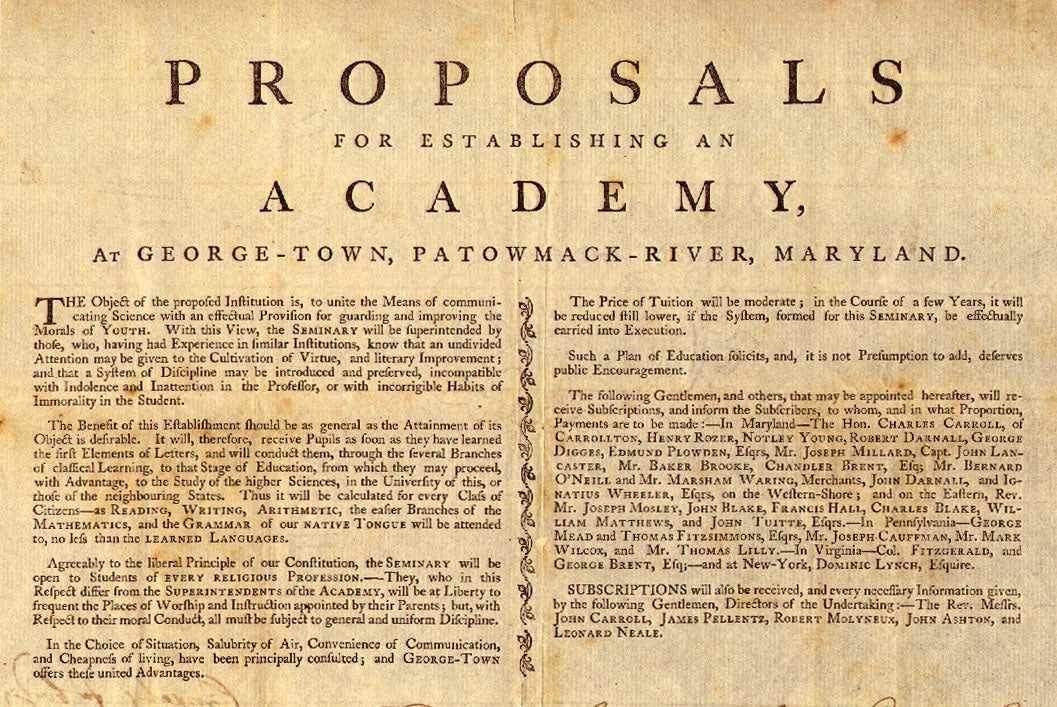
Proposals for establishing an academy
[Baltimore?]
[1786?]
Carroll's letter of authorization for fund-raising and his Proposals were the first public notices of the proposed academy; the copies displayed were sent to Edward Weld of Lulworth, Dorset, March 30, 1787. In a letter of February 7, 1787 (60), Carroll says that they should have been sent to the addressee long since. (GUA)
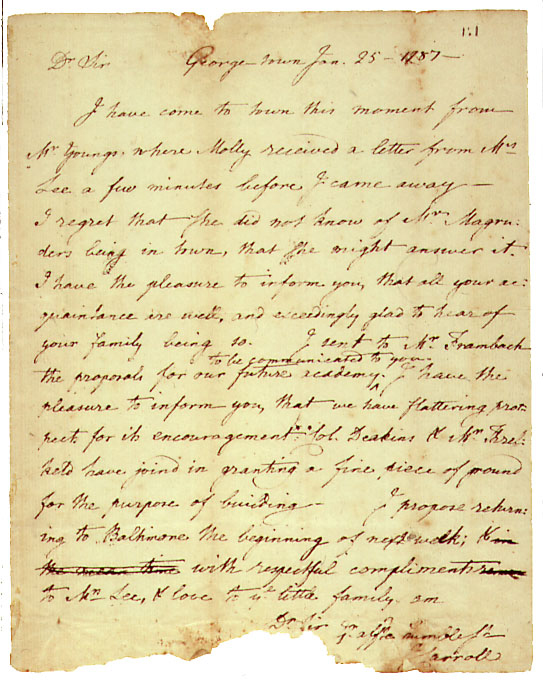
Carroll, John, to Thomas Sim Lee, Georgetown
January 25, 1787
"I have the pleasure to inform you that we have flattering prospects for its [the academy's] encouragement: Col. Deakins & Mr. Threlkeld have joined in granting a fine piece of ground for the purpose of building." (GULSC)
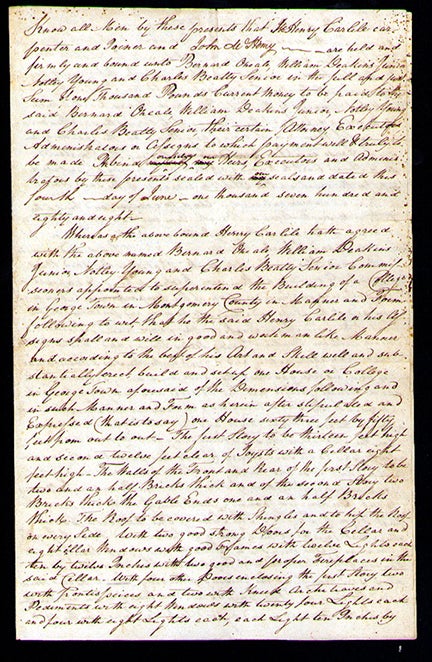
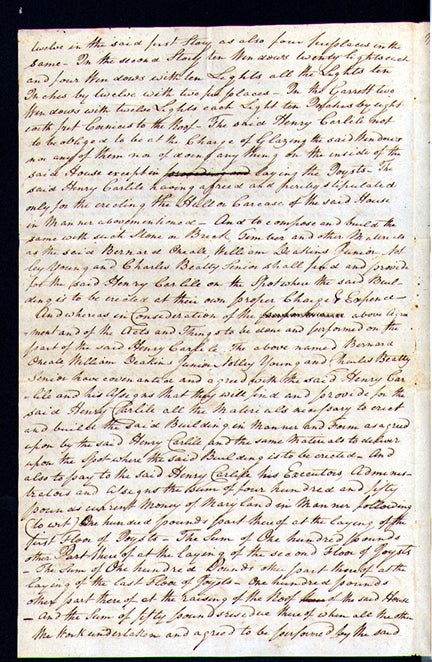

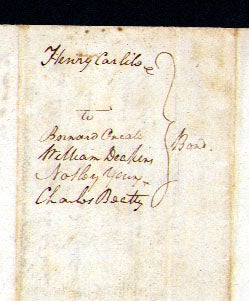
Contract for erecting the first building of Georgetown College
June 4, 1788
Henry Carlile, carpenter and joiner, and John M. Henry agree to build the "hull or carcase" for 450 pounds, Maryland money. The materials were to be provided by the superintendents, Bernard O'Neale, William Deakins, Notley Young, and Charles Beatty. (MSJ)
Carroll, John, to Rev. Charles Plowden, Maryland
March 1, 1788
"We shall begin the building of our Academy this summer. In the beginning we shall confine our plan to a house of 63 or 64 feet by 50, on one of the most lovely situations that imagination can frame." (MSJ)
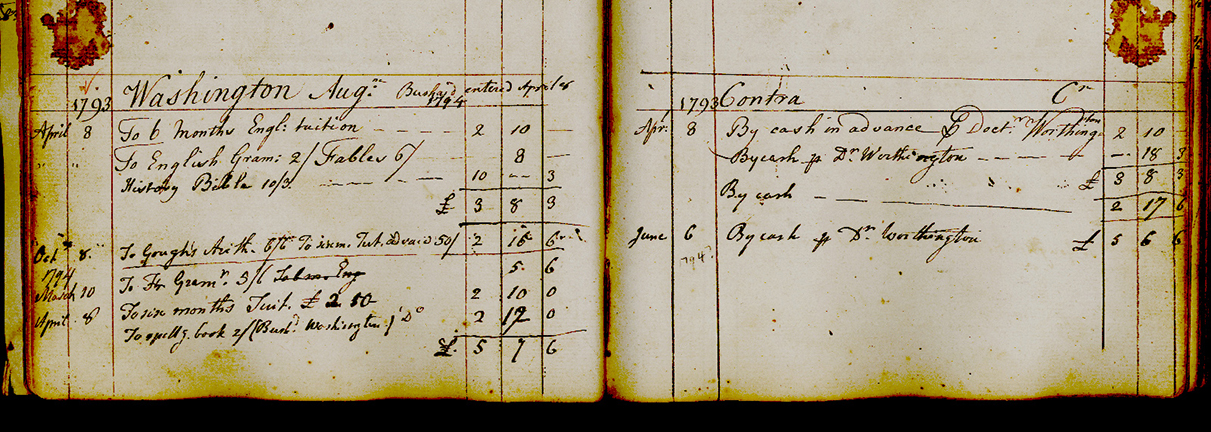
Ledger A-1, Georgetown College
1791-1796
This ledger includes accounts with William Gaston, the first student, and Mathew Carey, bookseller. The opening displayed shows the account of Augustine and Bushrod Washington, sons of Bushrod Washington, the nephew of the first President. (GUA)
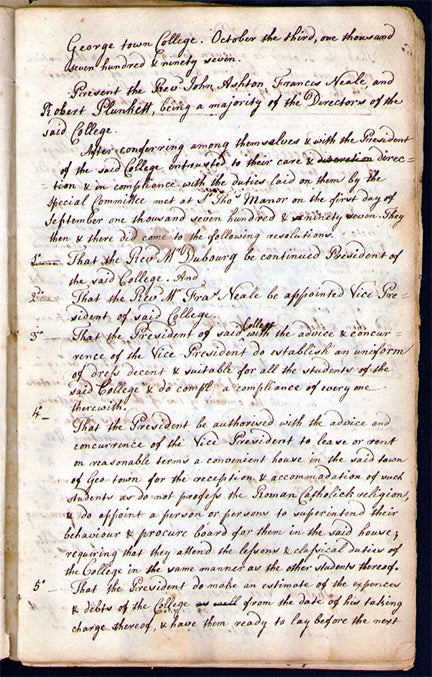
Minutes, Board of Directors, Georgetown College
1797-1815
The General Chapter of the Clergy appointed five directors for the proposed academy in 1786; this number was reduced to three in 1792. Neither body appears to have kept regular minutes. On September 1, 1797, a committee of the Select Body appointed a new board and resolved that they should appoint a secretary who should keep a book of their proceedings. Minutes of the first meeting are shown. (GUA)

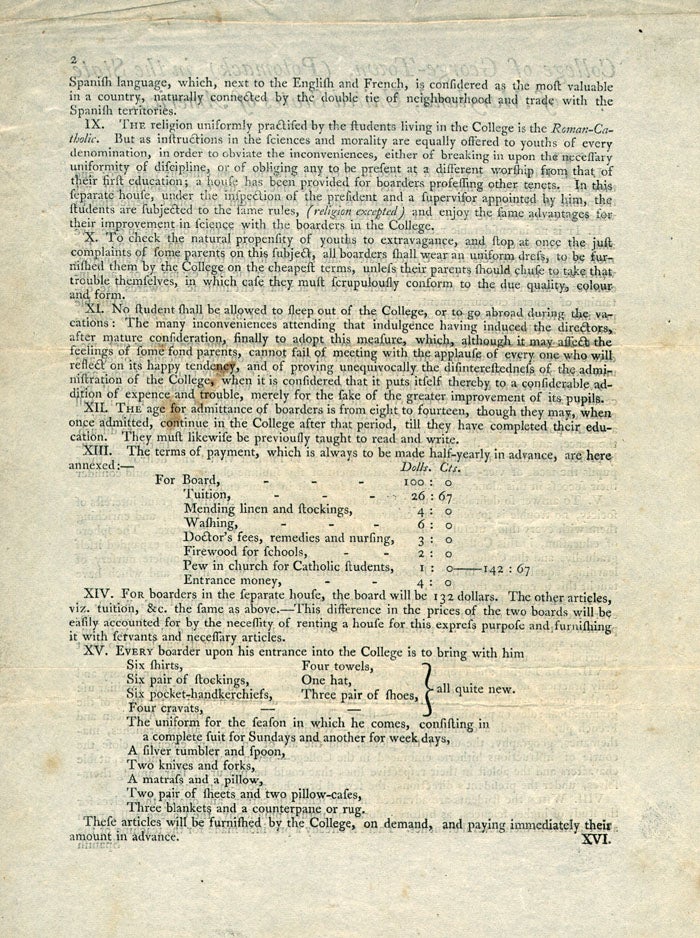
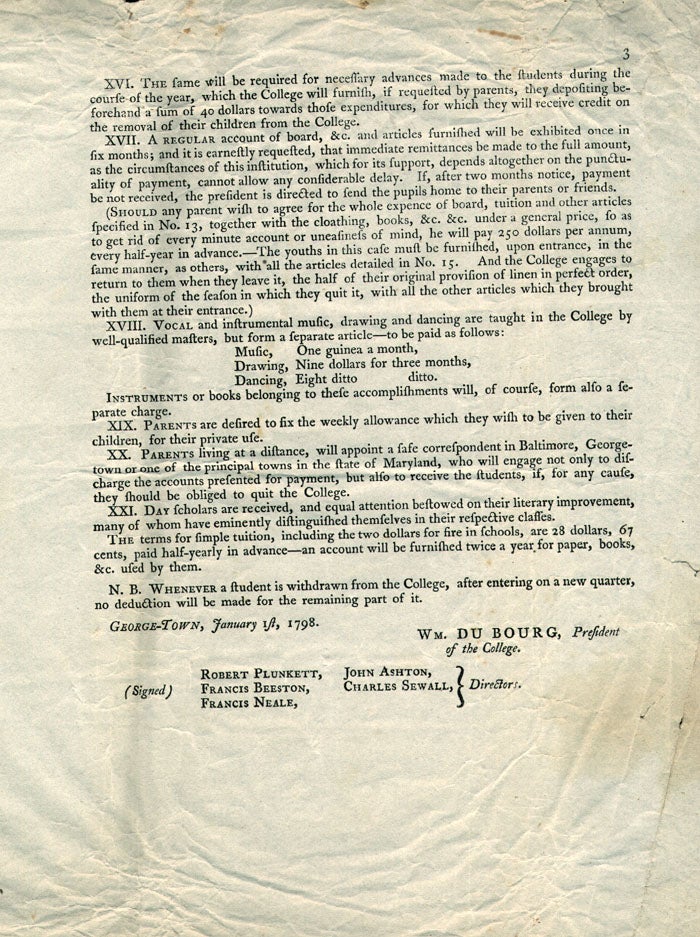
College of George-Town, (Potomack) in the State of Maryland, United States of America
[Georgetown]
1798
(GUA)
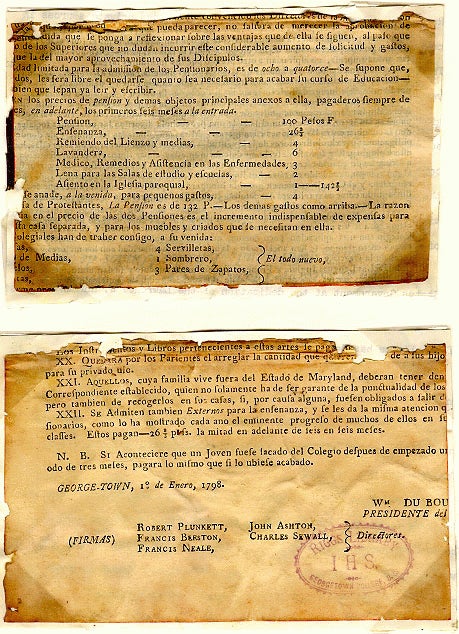
The same, in Spanish
[Georgetown]
1798
The first prospectus of Georgetown College, issued by President DuBourg on January 1, 1798. The fragments of the Spanish version are unique; no copy of the French version published at the same time is known to exist. (GUA)
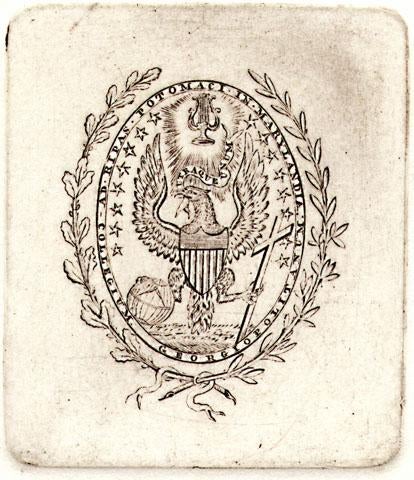
Emblem of Georgetown College
ca. 1798
Etched copper plate by an unknown artist. A ledger entry of May 11, 1798, records the payment of 15 shillings to a college employee, one Justane, for "the Seal of the Corporation." Though not, properly speaking, a seal, this plate is linked with that entry, and later official seals have employed various modifications of this original design. (GUA)
Catholicae fidei
Pius VII
[Polotsk or Mogilev?]
[1801]
By the brief Catholicae fidei, Pius VII gave his formal sanction to the branch of the Jesuits which had survived suppression in White Russia. Under its terms the vicar-general, Franciszek Kareu, became "General" of the Society. Its circulation throughout the world caused a flood of petitions from groups of ex-Jesuits to affiliate with the Russian Jesuits, even though such affiliation was not formally sanctioned in Catholicae fidei. (MSJ)

Petition requesting restoration of the Society of Jesus in North America
Newtown
August 30, 1802
(BCA)
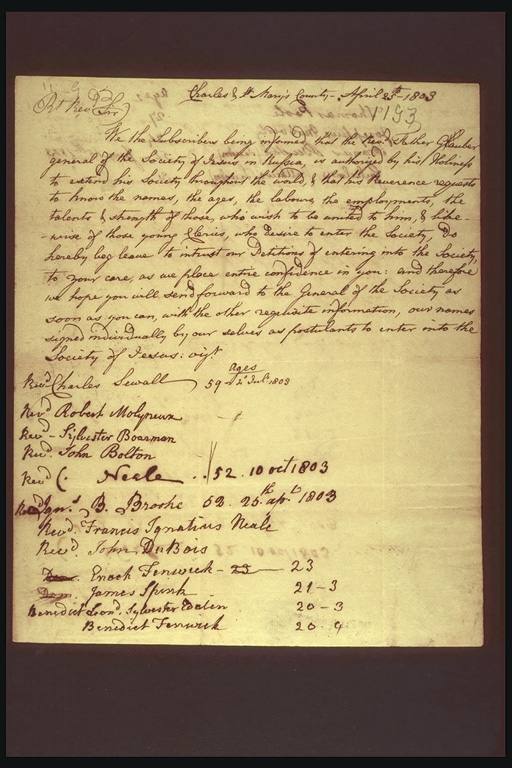
List of those declaring desire to become postulants of the Society
Charles and St. Mary's County
April 25, 1803
(BCA)
On May 25, 1803, Bishops Carroll and Neale, the recipients of the petition and its addendum, forwarded the request to the General in Russia, Gabriel Gruber.
Stone, Rev. Marmaduke, to John Carroll, Stonyhurst
February 24, 1805
Fr. Stone's letter includes a copy of the letter sent by Father General Gruber to Carroll, March 12, 1804, but which Carroll never received; thus Stone's letter, a year later, brought the first news of the General's acceptance of the petitioners. (BCA)
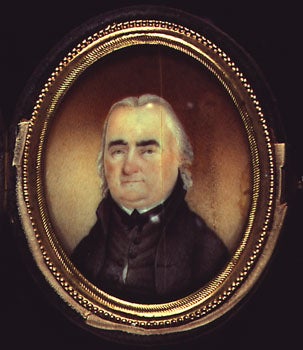
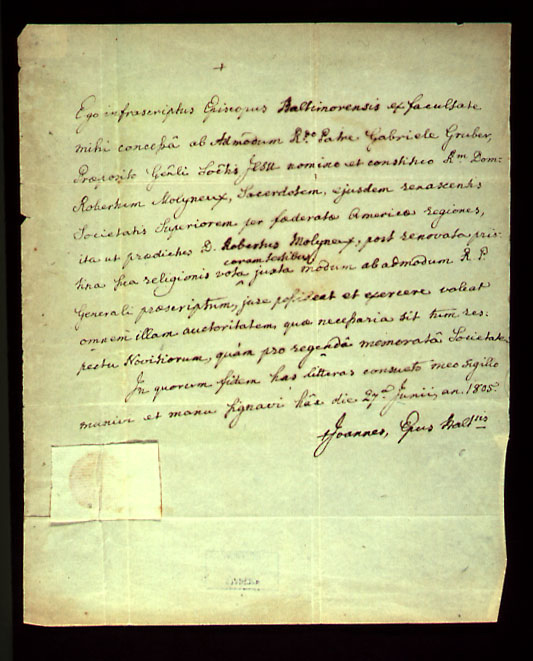
Appointment of Rev. Robert Molyneux as Superior of the American Jesuits
Carroll, John
[Baltimore?]
June 27, 1805
Molyneux's appointment antedates by nearly two months the formal taking of vows by Frs. Molyneux, Sewall, and Charles Neale, who became the first Americans to rejoin the Society, August 18, 1805. (MSJ)
Brzozowski, Rev. Tadeusz, to John Carroll, Polotsk
November 17, 1805
(BCA)
The same to the same, St. Petersburg
February 22, 1806
(BCA)
The confusions introduced into the process of restoration by faulty mails and the death of Father General Gruber in April, 1805, were finally resolved in these letters from his successor, the second specifically approving Carroll's choices of Molyneux as Superior and Francis Neale as head of the novitiate, and leaving no doubts that the American Jesuits were once again firmly a part of the Society.
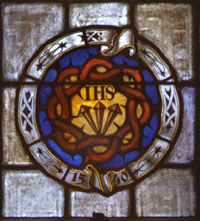
The Seal of the Society of Jesus
As rendered in stained glass in the Healy Building, Georgetown University
George M. Barringer
Hubert J. Cloke
Rev. Emmett Curran, S. J.
Jon K. Reynolds
This exhibit would not have been possible without the cooperation of the following institutions, collections, and individuals. Items loaned for the exhibit are designated in the catalog by abbreviations following each name below.
- Archives, Maryland Province of the Society of Jesus, Georgetown University (MSJ)
- Archives, Archdiocese of Baltimore (BCA)
- The Woodstock Theological Center Library, Georgetown University (Woodstock)
- Rev. Edward Carley (Carley)
- Dr. Yolanda Frederikse (Frederikse)
- The Georgetown University Collection (GUC)
- The Maryland Historical Society (MHS)
- The Georgetown University Archives (GUA)
- Special Collections Division, Georgetown University, Lauinger Library (GULSC)
The compilers of this catalog wish to thank all of those who have borne with their questions, impatience, and persistent demands for assistance. Professors Dorothy Brown, Clifford Chieffo, and Richard Duncan have helped, as have Rev. Henry Bertels, S. J., Rev. Gerald P. Fogarty, S. J., Mr. Carl Chamberlain, and Mr. Richard Mehring. Our special thanks go to Mr. John N. Pearce, whose advice and writings on Georgetown's silver articles have been of the greatest assistance. Finally, this catalog could not have existed at all without the material assistance provided by Rev. Robert J. Henle, S. J.