Introduction
The enormous output of posters in the United States during and just after the First World War belies this country’s late entry into that conflict. Spurred by the example of the various European combatants, the creation and production of appropriate “pictorial publicity” quickly achieved a very high level of artistic involvement and industrial application. Thousands of designs were created, and most of them were printed in very large numbers. As a result, very few of these posters are scarce even today, and only a small handful might qualify as “rare.”
A large number of artists were involved in the creation of posters during the war. Some of them came to the work with their reputations already secured through their commercial work in books, magazines, and advertising: of these, for example, Howard Chandler Christy and James Montgomery Flagg are represented in this exhibition, Harrison Fisher and Edward Penfield are not. Some of the artists in the exhibit are now known to us largely because they did these—and other—posters. “Ruttan” and the euphonious “H. Blyleven Esselen” defeated attempts to track them down in the reference resources at hand; John E. Sheridan, who might well be a mystery elsewhere, is known here because he attended Georgetown in the closing years of the 19th century and his first poster work was probably the series he did advertising Georgetown baseball games against Princeton, Yale, Virginia, and Pennsylvania. As in Britain, some posters took advantage of work first published as cartoons in the daily papers; the examples shown here by W. A. Rogers and Oscar Cesare are typical. Many of the artists, whether obscure or famous, contributed their work gratis to the war effort.
The posters helped not only with the obvious aim of recruiting members for the armed forces, but with the parallel home-front efforts embodied in various conservation efforts, in the multiple aims of the United War Work Campaign, in the work of the Red Cross, and perhaps most notably in the rapid subscription of the Liberty and Victory loans. Each of the four Liberty loan campaigns (two in 1917, two in 1918) and the Victory loan campaign of early 1919 brought an outpouring of poster art on both the local and national levels. Of the six posters in the exhibit not listed in Theofiles’ book, three relate one way or another to recruiting, and the other three are loan appeals.
We note also that the same printing firms which thrived on the production of the posters contributed in some cases to their creation. W. F. Powers in New York made and donated the color plates for the Cesare poster; the Robert Gary Company in Brooklyn contributed the entire Cyrus LeRoy Baldridge effort. And the striking poster by Joseph Grosse, unknown to Theofiles, was contributed by the “Cloak, Suit and Skirt Industry Committee.” In a context where the various Liberty and Victory loan drives achieved something like 30 billion dollars in returns these efforts may seem tiny, but cumulatively they and others like them did much for the proliferation of the poster as an important means of war effort communication.
The current exhibition, timed to open on the 81st anniversary of Armistice Day, November 11, is the second in what we hope will be a series of exhibits of posters drawn from the collection of Roger N. Mohovich, acquired in 1997 as a gift from his heirs, David van Buskirk and Warren Wilson. See also: TAKE UP THE SWORD OF JUSTICE: British Posters of World War I.
Entries for each poster are arranged in the following format: artist (where known); title; size (in inches, height before width); place of printing, publisher, and date; notes (those in quotation marks taken directly from the posters themselves); and references. References are to the following works: George Theofiles, American Posters of World War I (Dafran, 1973); Labert St. Clair, The Story of the Liberty Loans (James William Bryan Press, 1919); Joseph Darracott, The First World War in Posters (Dover, 1974); and Maurice Rickards, Posters of the First World War (Walker, 1968).
George M. Barringer
Georgetown University Library
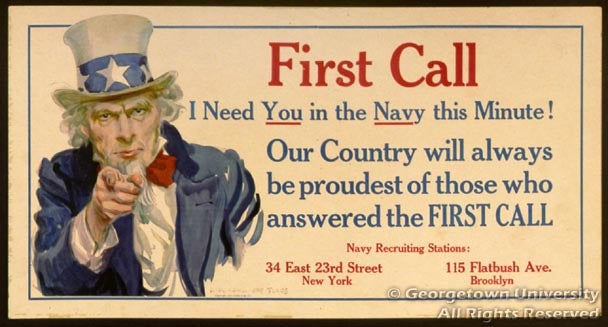
First Call
Flagg, James Montgomery, 1877-1960
[New York]: Leslie-Judge Co.
1917
printed on board
11 x 21
Not in Theofiles
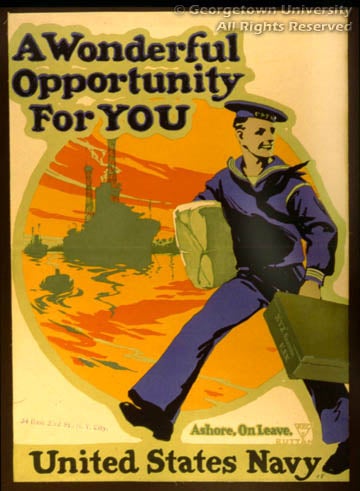
A Wonderful Opportunity for YOU
Ruttan
[n.p., 1919?]
28 x 20 1/4
Probably a post-war appeal for recruits. Not in Theofiles
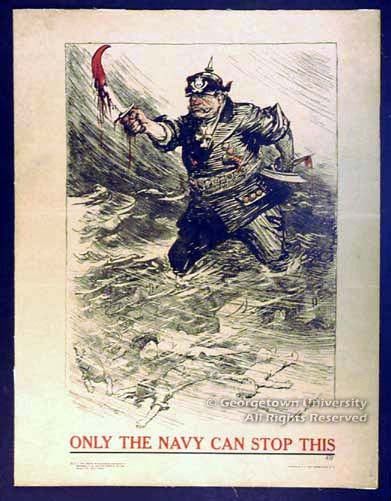
ONLY THE NAVY CAN STOP THIS
Rogers, William Allen, 1854-1931
New York: U. S. Navy Publishing Bureau
[1917]
25 1/4 x 19 1/2
Reproduction of a cartoon from The New York Herald. Theofiles 47; Rickards 180
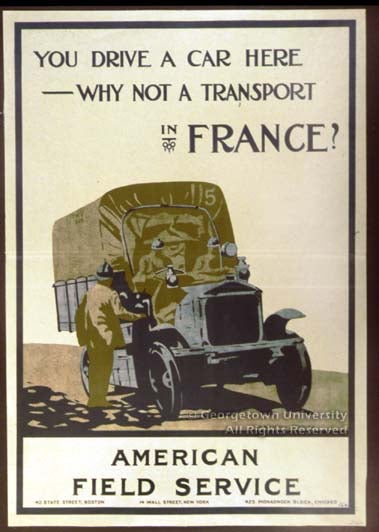
YOU DRIVE A CAR HERE - WHY NOT A TRANSPORT IN FRANCE?
Esselen, H. Blyleven
[n.p., 1918?]
27 1/2 x 19 1/4
Not in Theofiles
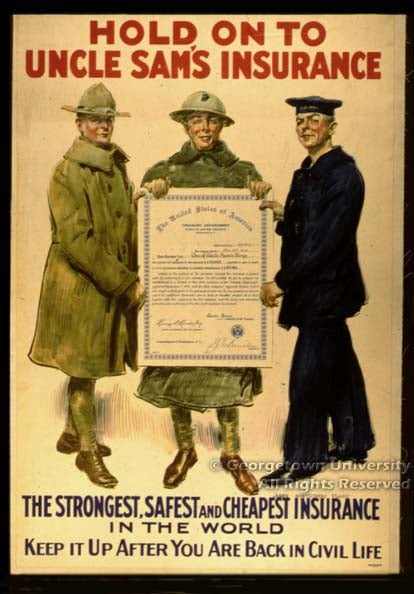
HOLD ON TO UNCLE SAM'S INSURANCE
Flagg, James Montgomery, 1877-1960
Boston: Forbes
[1919?]
30 x 20
Theofiles 324
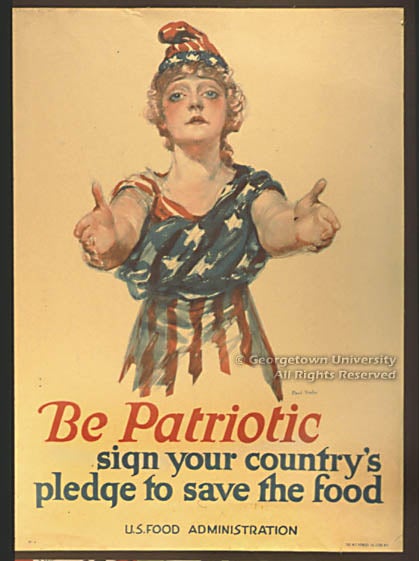
Be Patriotic
Stahr, Paul C., 1883-19??
New York: W. F. Powers
[1918?]
28 3/4 x 21
Theofiles 97
Food is Ammunition
Sheridan, John E.
[n.p., 1918?]
28 3/4 x 20 1/4
Theofiles 76; St. Clair, p. 155
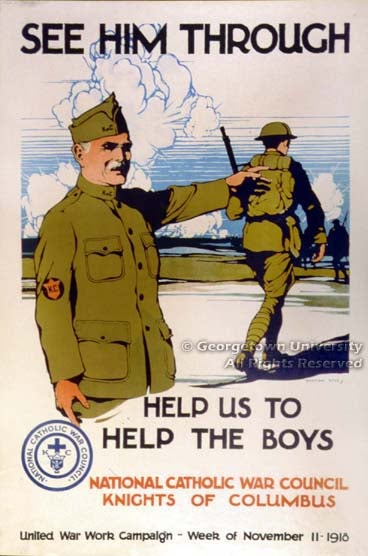
SEE HIM THROUGH
Rice, Burton
[n.p.] 1918
25 3/4 x 19 3/4
Theofiles 294, attributed to "Carlson Rice"
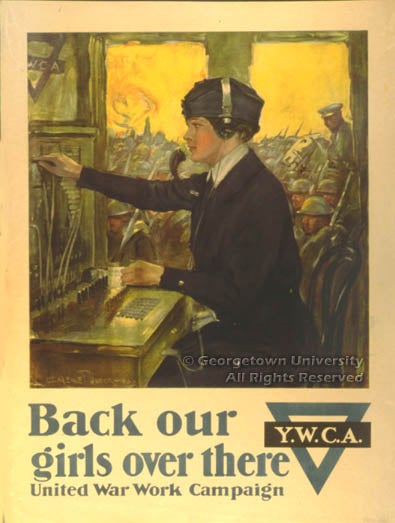
Back our girls over there
Underwood, Clarence Frederick, 1871-1929
[n.p., 1918?]
28 x 21 1/4
Theofiles 213; St. Clair, p. 177
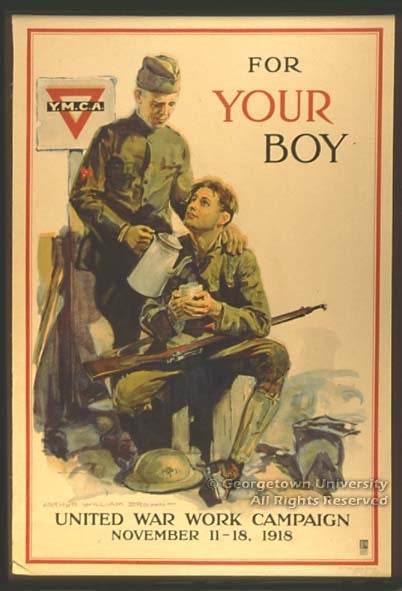
FOR YOUR BOY
Brown, Arthur William, 1881-19??
Philadelphia: Ketterlinus
[1918?]
29 3/4 x 20
Produced by the Committee on Public Information, Division of Pictorial Publicity. Theofiles 197
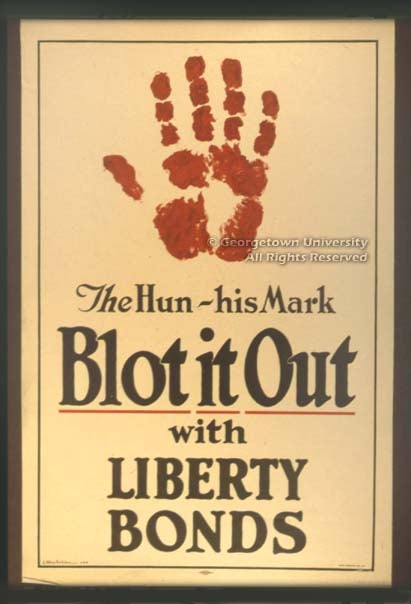
The Hun ~ his Mark
St. John, J. Allen.
Chicago: Manz Engraving Co.
[1917]
30 1/4 x 19 3/4
Theofiles 137; St. Clair, p. 84; Darracott 40
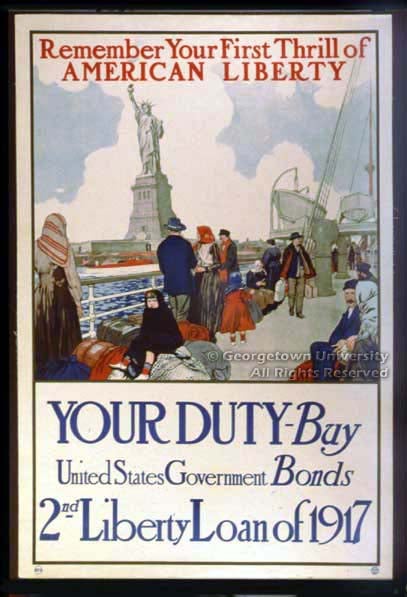
Remember Your First Thrill of AMERICAN LIBERTY
[Anonymous]
New York: Sackett & Wilhelms
[1917]
30 x 20
Theofiles 135; St. Clair, p. 73
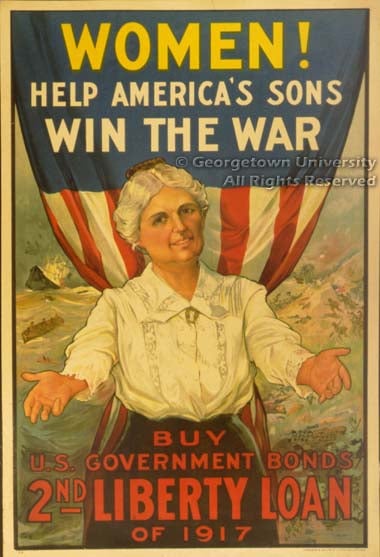
WOMEN! HELP AMERICA'S SONS WIN THE WAR
Porteous, R. H.
Chicago: Edwards & Deutsch
[1917]
30 x 20
Theofiles 131, attributed to "P. S. Porteus;" St. Clair, p. 73
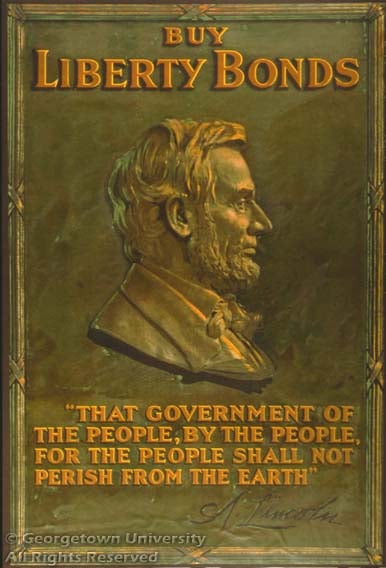
"THAT GOVERNMENT OF THE PEOPLE..."
[Anonymous]
[n.p., 1918]
30 x 20
Theofiles 152; St. Clair, p. 36
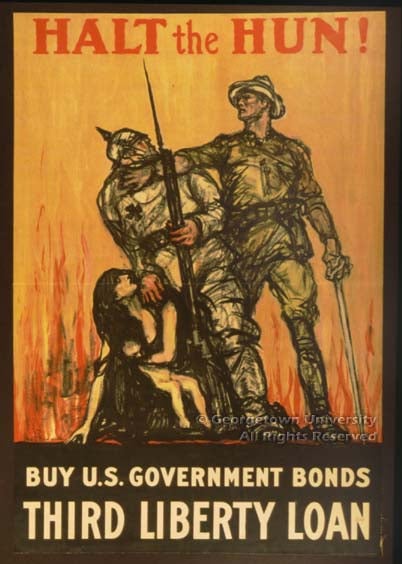
HALT the Hun!
Raleigh, Henry, 1880-19??
Chicago: Edwards & Deutsch
[1918]
28 3/4 x 19 3/4
Theofiles 140; St. Clair, p. 37
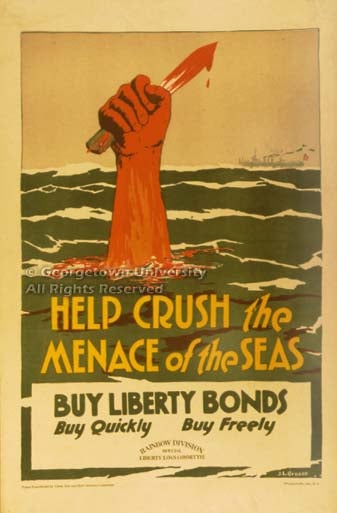
HELP CRUSH the MENACE of the SEAS
Grosse, Joseph L.
New York: O'Connor-Fyffe Adv.
[1918?]
27 3/4 x 18 1/4
"Poster Contributed by Cloak, Suit and Skirt Industry Committee" Not in Theofiles
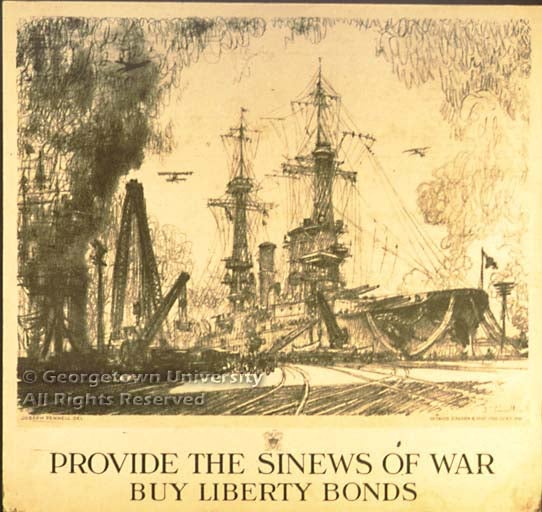
PROVIDE THE SINEWS OF WAR
Pennell, Joseph, 1860-1926
New York: Heywood, Strasser & Voigt
1918
printed on board
20 x 21
Theofiles 162
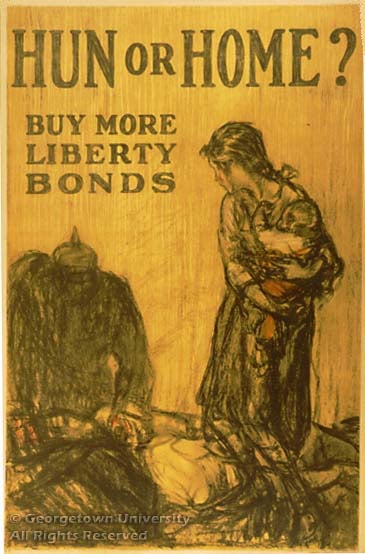
HUN OR HOME?
Raleigh, Henry, 1880-19??
Chicago: Edwards & Deutsch
[1918]
29 3/4 x 19 3/4
Theofiles 166; St. Clair, p. 137
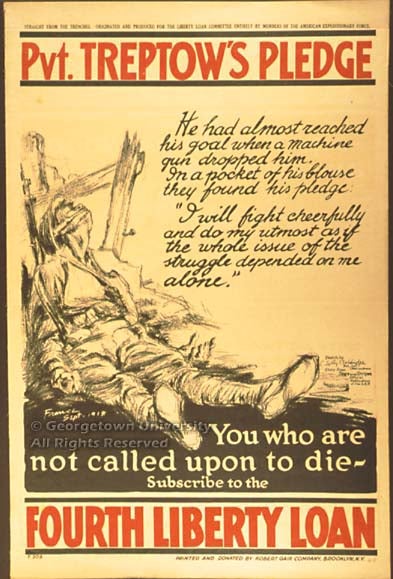
Pvt. TREPTOW'S PLEDGE
Baldridge, Cyrus LeRoy, 1889-19??
Brooklyn: Robert Gair Company
1918
30 x 19 3/4
Poster donated by the printing company. Not in Theofiles
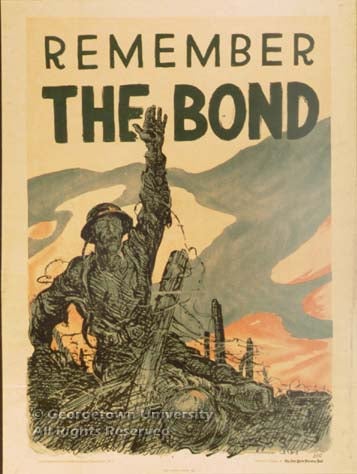
REMEMBER THE BOND
Cesare, Oscar E.
[New York]: The Nation Press
[1918?]
24 3/4 x 18 1/2
"Color Plates made and donated by Powers Engraving Co., N. Y." Reproduction of a cartoon from The New York Evening Post. Not in Theofiles
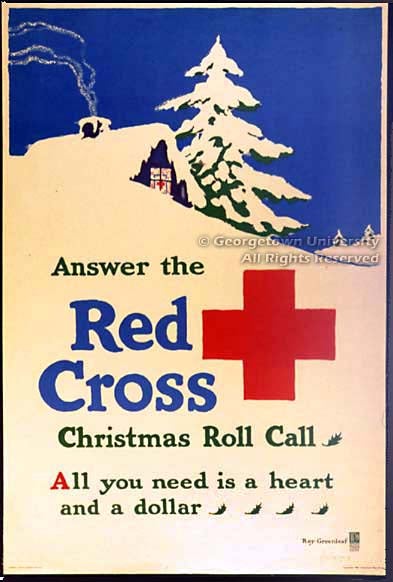
Answer the Red Cross Christmas Roll Call
Greenleaf, Ray, 18??-1950
Buffalo: Niagara Litho. Co.
1918
30 x 20
Produced by the Committee on Public Information, Division of Pictorial Publicity. Theofiles 232
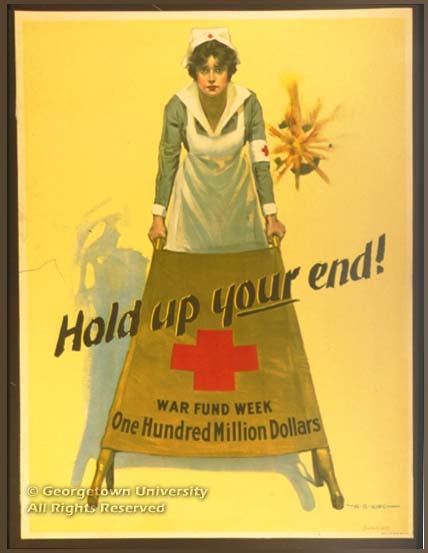
Hold up your end!
King, William B., 1880-1927
[New York?]
1918?
27 1/2 x 20 1/4
Theofiles 221; St. Clair, p. 142
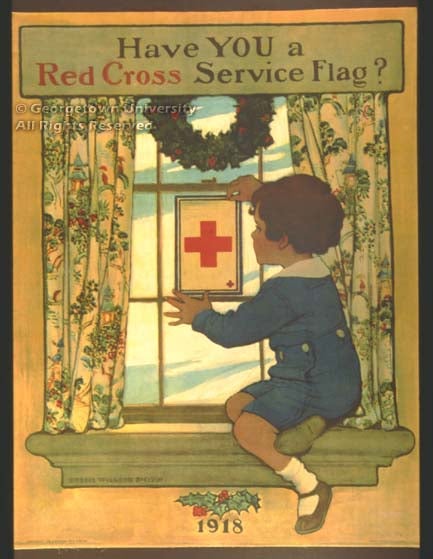
Have YOU a Red Cross Service Flag?
Smith, Jessie Wilcox, 1863-1925
Chicago: Edwards & Deutsch
[1918?]
28 x 22 1/4
Theofiles 237
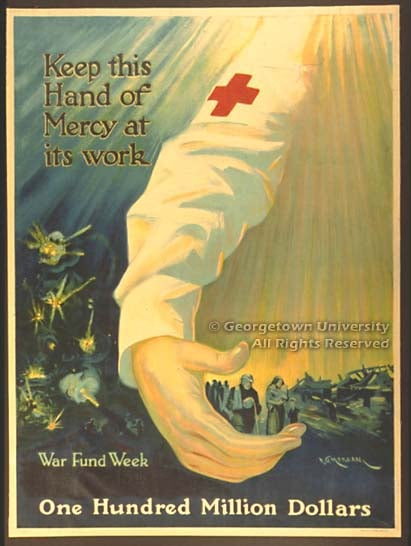
Keep this Hand of Mercy at its work
Morgan, P. G.
[New York?]
1918?
27 1/2 x 20 1/2
Theofiles 228, attributed to "C. Emerson, Jr."
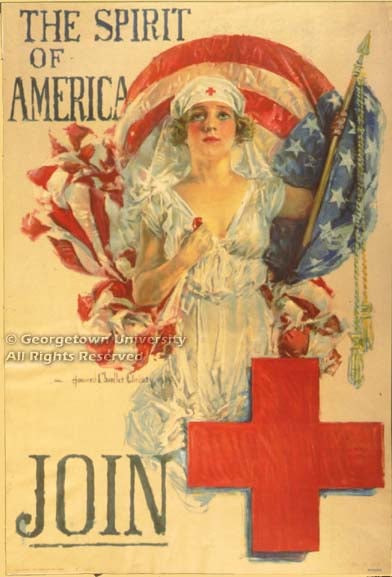
THE SPIRIT OF AMERICA
Christy, Howard Chandler, 1872-1952
Boston: Forbes
[1918?]
30 x 20
Theofiles 242; Darracott 6