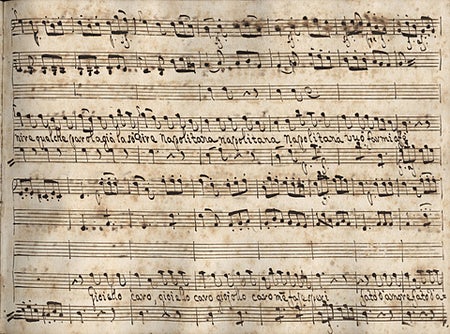
Italian Opera represented the lingua franca of European stage drama from the seventeenth to nineteenth centuries. During the “long” eighteenth-century (1690–1790), two genres of opera predominated: the dramma per musica or tragedy (exemplified above all by the dramas of Pietro Metastasio) and opera buffa or comic opera. The former was closely associated with the Ancien Régime or absolutist courts of Europe, while the latter was the province of the public theaters on the Continent. Although not unified as a single nation until the late nineteenth century, the Italian city states and in some cases nations were the unparalleled innovators. The regional centers of this production were the Kingdom of Naples and Republic of Venice.
The manuscripts on display attest to the rich variety within each tradition of opera. By the late eighteenth century, tragedy had given way to new concepts such as the azione sacra or “Lenten tragedy.” The paradigm for this concept was Guglielmi’s Debora e Sisara (1788). The diversification of opera buffa is evident in Cimarosa’s L’Italiana in Londra, written originally for Rome, but significantly altered for performances in Venice and Naples; the latter city required at least one role in the local dialect to meet audience expectations. Both of these works were widely disseminated in European theaters and in the private collections of connoisseurs.
The Guglielmi and Cimarosa manuscripts were originally part of the music collection of one of the most influential aristocratic families in eighteenth-century France. They were collected by Marie-Louise-Fidèle Baronne de Talleyrand-Périgord, an experienced singer and harp player who was married to General Louis-Marie de Talleyrand-Périgord (1738–1799), uncle of the “Great Talleyrand,” Napoleon’s Chancellor and Minister. As French Ambassador to the King of Sicily, General Talleyrand lived in Naples from 1785. While General Talleyrand was occupied with Neapolitan politics, his wife seems to have spent most of her time at San Carlo, the most important of the Neapolitan opera houses. She avidly sought the works of a number of contemporary composers, as did her son, forming a collection which remains an important source for musicologists.
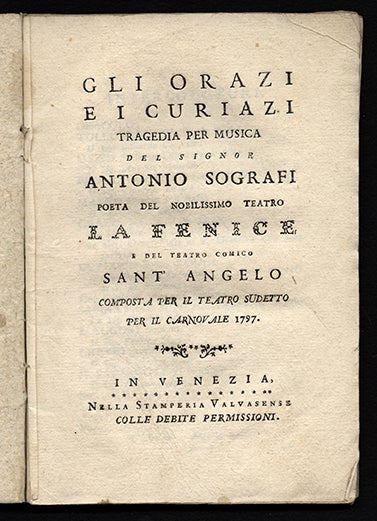
Gli Orazi e i Curiazi
Domenico Cimarosa (1749–1801), composer
Antonio Simone Sografi, librettist
Venice: Stamperia Valvasense, [1797]
This is a rare first edition of the libretto for Cimarosa's opera, Gli Orazi e i Curiazi (The Horatii and the Curiatii) based on Pierre Corneille's tragedy Horace (1640). It was first performed at the Teatro La Fenice in Venice at Christmas 1796. This important opera became a rallying point for republicanism in Italy. It was banned in various parts of Italy, and when Naples fell in 1799, it was one of the first stage works to be mounted to proclaim the virtues of the resulting short-lived "Parthenopean Republic."
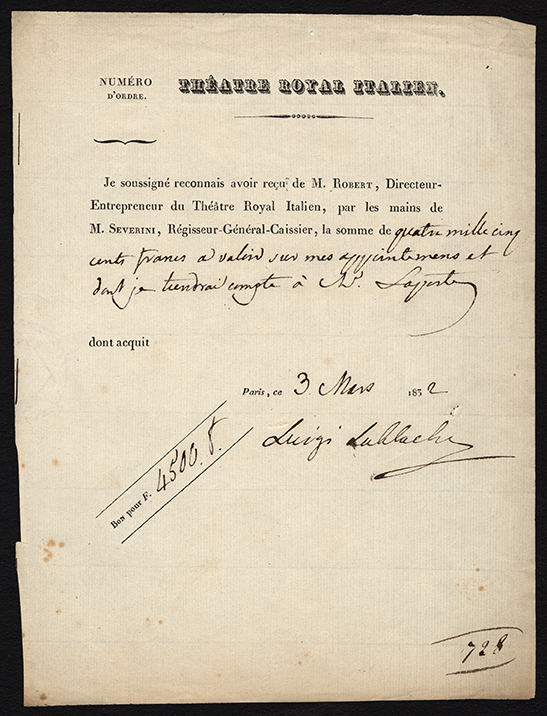
Théâtre Royal Italien document acknowledging payment for services
Luigi Lablache (1794–1858)
3 March 1832
Lablache was the premier operatic bass of his time, debuting in Cimarosa's Il matrimonio segreto in London in March 1830 at the King's (later Her Majesty's) Theatre. His Paris debut followed in November 1830 at the Théâtre Royal Italien. He continued to appear at both theaters regularly until the early 1850s. This document records a payment by the latter theater to Lablache, with his signature, of 4,500 francs.
La Pie Voleuse [La Gazza Ladra]
Giaocchino Rossini (1792–1868), composer
Giovanni Gherardini, librettist
Paris: Castil-Blaze, [ca. 1824]
This rare first edition of the full score of Rossini's La Gazza Ladra, in French translation, is interspersed with 116 leaves of manuscript full score with text in the original Italian, mostly recording recitatives omitted from the printed score. This deluxe bilingual "edition" represents a common method of disseminating operas. Its English provenance—it bears the ownership signature of conductor, organist and composer Sir George Smart (1776–1867)—testifies further to its international circulation.
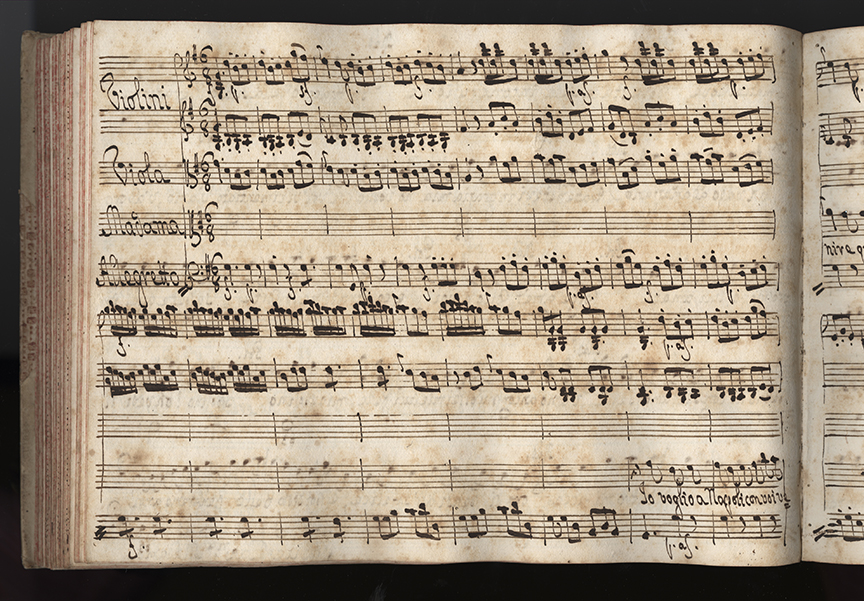
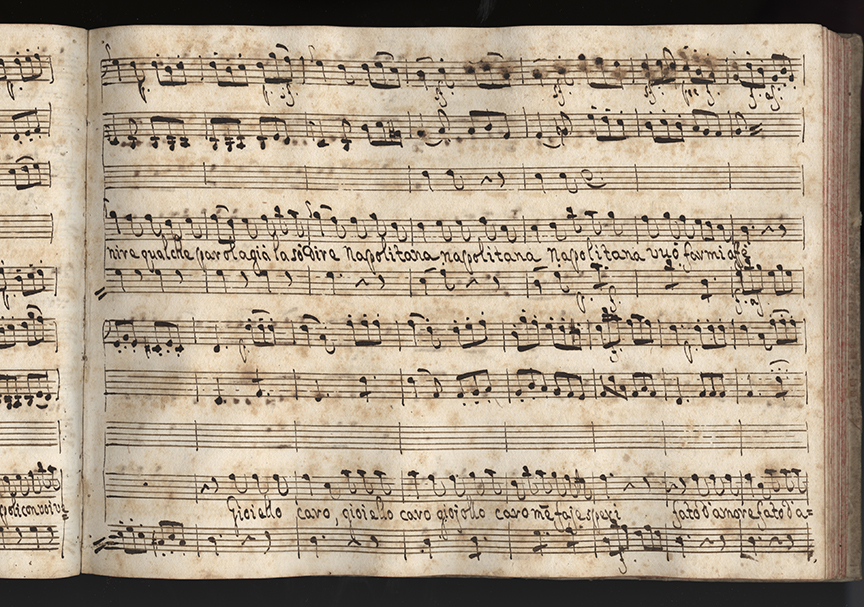
L'Italiana in Londra
Domenico Cimarosa (1749–1801), composer
Giuseppe Petrosellini, librettist
Copyist's manuscript, ca. 1780
Cimarosa's Italian Girl in London premiered in Rome in December 1779 to great success, as evidenced by numerous manuscript copies as well as a printed score in 1790. The Talleyrand manuscript is an important early source, recording the recitatives and variant readings in the music. On display is a section of an aria for Madama, illustrating vocal characteristics of the buffa style, such as rapid iterations and reiterations of text ("Napolitana, Napolitana, Napolitana") typical of comedic roles.
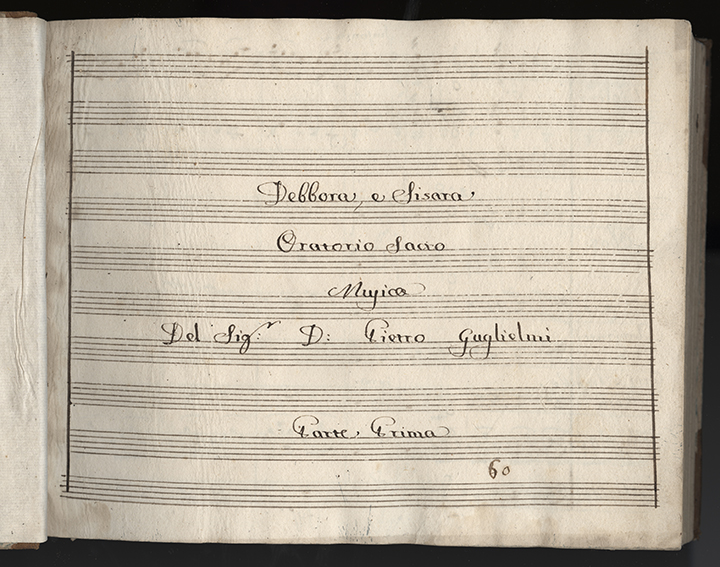
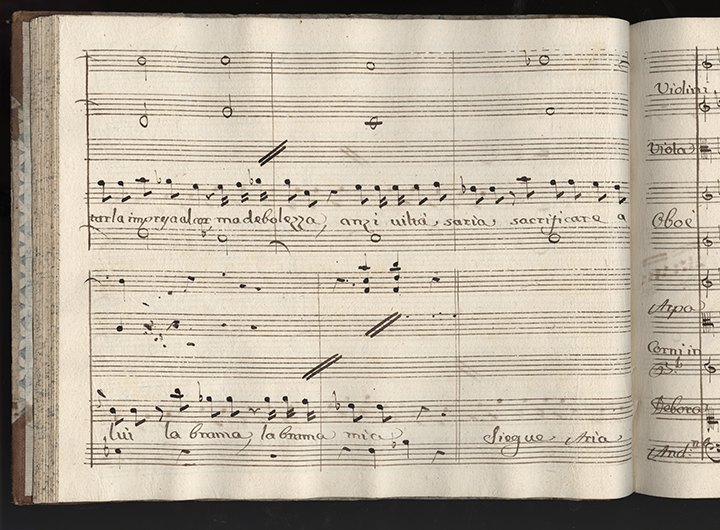
Debora e Sisara
Pietro Alessandro Guglielmi (1728–1804), composer
Carlo Sernicola, librettist
Copyist's manuscript, ca. 1790
Based on the fourth chapter of the book of Judges, Debora and Sisara was "almost universally regarded as one of the most sublime works of the late eighteenth century" (Grove Music Online). Despite the designation of the title page, it is not an oratorio but an azione sacra, a genre of theater unique to Naples. These works were performed during Lent, a time that had traditionally banned theater, and they were marked by an elaborate scenic design as well as graphic content. This opera was widely disseminated and led to Guglielmi's appointment as maestro di cappella in the Vatican. On display is part of an aria for Debora before battle. Guglielmi's use of obligato harp ("Arpa")—quite rare in the 18th century—underlines Debora's mysticism as a prophet and visionary.
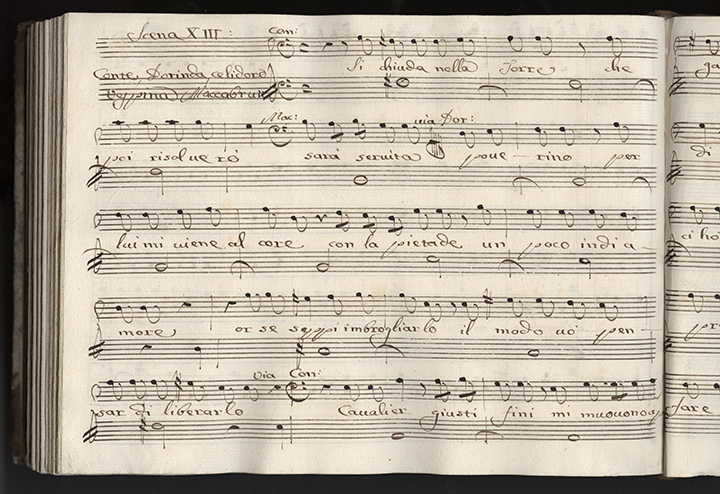
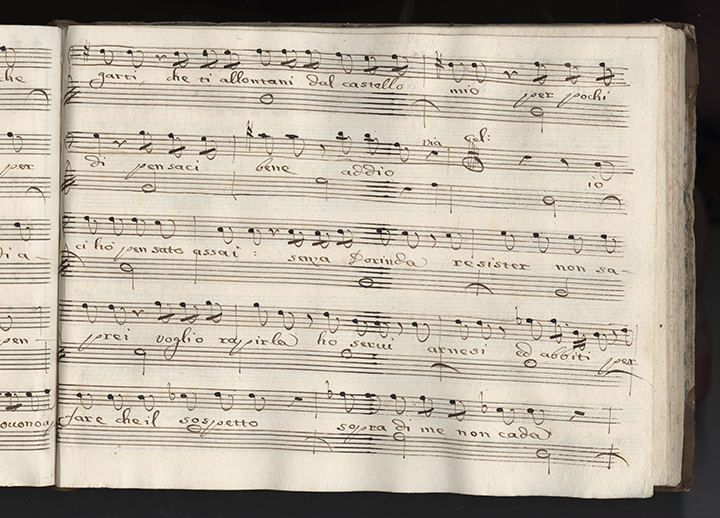
La Bella Pescatrice
Pietro Alessandro Guglielmi (1728–1804), composer
F. S. Zini, librettist
Copyist's manuscript, ca. 1790
The comedy The Beautiful Fisherwoman premiered in October 1789 at the Teatro Nuovo in Naples. It received many performances for about two decades, but was thereafter largely forgotten in part owing to the bias of German critics against Italian opera as superficial. Today Guglielmi's reputation is on the rise and this opera is under consideration for a future performance at the famed Maggio Musicale Fiorentino. In the secco ["dry"] recitative on display, the bass line is notated as a series of single notes. Yet these pitches are the basis for improvisation by the continuo group, consisting of the keyboard and oftentimes cello and bass, whose goal is to accentuate the meaning of the poetry.
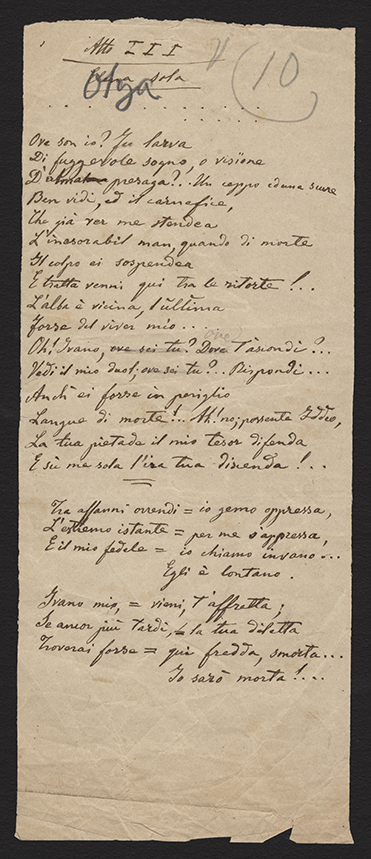
Olga
Amilcare Ponchielli (1834–1886), composer
Carlo D'Ormeville, librettist
Ponchielli, the composer of La Gioconda, left behind a number of manuscript sketches for an opera to have been called Olga. The fragments of the libretto on display here dramatically reveal the working relationship between composer and librettist, with corrections and modificazioni made by Ponchielli to D'Ormeville's handwritten verses.